
What Is Integrated Marketing Communications? A Guide for Agencies and SaaS
Integrated marketing communications is the strategic coordination of all messages and media used by a brand to ensure consistency and reinforce a core idea across every customer touchpoint. This approach moves away from siloed marketing efforts, where advertising, public relations, and content teams operate independently. Instead, it unifies them into a single, cohesive strategy. For marketing agencies and SaaS companies, implementing an integrated marketing communications plan is key to building a strong brand identity, fostering customer trust, and maximizing the impact of every campaign.
What is Integrated Marketing Communications?
Integrated Marketing Communications (IMC) is a framework designed to deliver a clear, consistent, and compelling message about an organization and its products. Think of it like a symphony orchestra. Each instrument (or marketing channel) plays a different part, but they all work together to create one beautiful piece of music. If the strings, woodwinds, and percussion were all playing different songs, the result would be noise. Similarly, when your social media, email campaigns, and blog posts send conflicting messages, it creates confusion and weakens your brand.
The core principle of IMC is that the whole is greater than the sum of its parts. A unified message amplified across multiple channels has a much larger impact than a series of disconnected ones. According to experts in the field, this process unifies elements like public relations, social media, and advertising to create a more effective, customer-centric approach. This integration ensures that no matter how a customer interacts with your brand, whether through a search ad, a blog post, or a tweet, they receive the same essential story and value proposition.
Why a Unified Marketing Strategy Matters
Adopting an IMC strategy isn’t just about making your marketing look neat and tidy. It has tangible benefits that directly impact your bottom line and brand equity. A unified approach is a core part of effective marketing management because it aligns all activities toward a common set of goals. The emergence of IMC in the 1990s was a direct response to an increasingly fragmented media environment, a challenge that has only grown in the digital age, as noted in a recent bibliometric analysis published by Nature.
- Builds Brand Consistency and Trust: When your messaging is consistent everywhere, customers learn to recognize and trust your brand. Consistency signals professionalism and reliability, which are crucial for building long-term relationships.
- Creates a Seamless Customer Experience: Customers don’t see your marketing department’s internal structure. They just see your brand. IMC ensures their journey is smooth and logical, whether they move from a social media post to your website or from an email to a product page.
- Increases Marketing Efficiency: Coordinating efforts reduces wasted resources. Instead of multiple teams creating different assets for the same campaign, you can create a core set of assets and adapt them for each channel. This saves time, cuts costs, and eliminates redundant work.
- Amplifies Your Message: When all your channels work together, they reinforce one another. A customer might see a Facebook ad, then read a related blog post, and finally receive a targeted email. Each touchpoint strengthens the core message, making it more memorable and persuasive.
Key Components of an IMC Strategy
A successful integrated marketing communications strategy combines various marketing disciplines into a cohesive plan. Each component has a specific role, but all are aligned to communicate the same core message. The goal is to choose a mix of channels that reaches your target audience effectively.
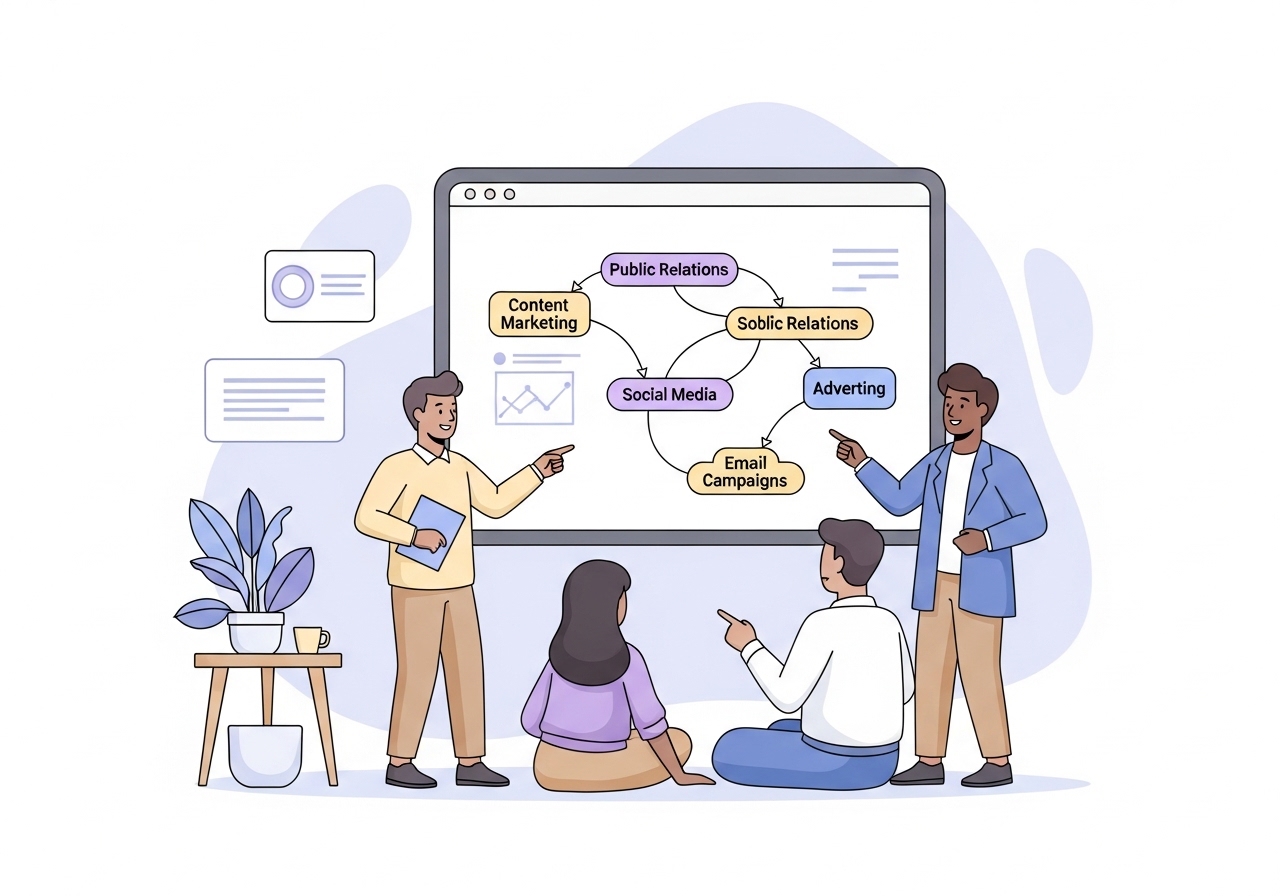
Common Channels in an IMC Mix
- Advertising: Paid media placements, including pay-per-click (PPC), social media ads, display ads, and traditional print or broadcast ads. This is often used for broad reach and top-of-funnel awareness.
- Public Relations (PR): Managing the spread of information between an organization and the public. This includes press releases, media outreach, and reputation management. Effective PR is a key part of any plan for strategic media communications.
- Content Marketing: Creating and distributing valuable, relevant content to attract and retain a clearly defined audience. This includes blog posts, ebooks, case studies, videos, and webinars, all optimized for SEO.
- Social Media Marketing: Engaging with customers and prospects on platforms like LinkedIn, Twitter, Facebook, and Instagram. It’s used for community building, brand awareness, and driving traffic.
- Email Marketing: Sending targeted messages directly to a list of subscribers. This is a powerful tool for nurturing leads, promoting content, and retaining customers.
- Direct Marketing: Communicating directly with customers through mail, telemarketing, or other personalized channels.
- Sales Promotions: Short-term incentives to encourage the purchase of a product or service, such as discounts, coupons, or contests.
How to Implement an IMC Plan Step-by-Step
Developing and launching an IMC plan requires careful planning and coordination. It’s a cyclical process of analyzing, planning, executing, and measuring. Following a structured approach helps ensure all your marketing efforts are aligned and working toward the same objectives.

- Conduct a Situational Analysis: Start by understanding your market, competitors, and your own brand’s strengths and weaknesses (SWOT analysis). Research your target audience to understand their needs, preferences, and media consumption habits.
- Define Your Marketing Objectives: Set clear, measurable, achievable, relevant, and time-bound (SMART) goals. Are you trying to increase brand awareness by 20%, generate 500 new leads, or boost customer retention by 10%?
- Develop a Core Message and Strategy: Based on your analysis and objectives, craft a single, compelling message that defines your value proposition. This message should be the foundation of all your campaign content.
- Select Your Marketing Channels: Choose the channels that are most effective for reaching your target audience and achieving your objectives. You don’t need to be everywhere. Focus on the platforms where your audience is most active.
- Integrate and Execute Your Tactics: Create your campaign assets and launch them across your selected channels in a coordinated manner. Ensure the visual branding, tone of voice, and core message are consistent everywhere.
- Measure Results and Optimize: Track your key performance indicators (KPIs) to see what’s working and what isn’t. Use this data to make adjustments to your strategy and tactics in real time for better results.
Measuring the Success of Your IMC Efforts
To justify your marketing spend and improve future campaigns, you need to track the performance of your IMC strategy. Because IMC involves multiple channels, measurement can be complex. The key is to focus on metrics that reflect your overall business objectives, not just channel-specific vanity metrics.
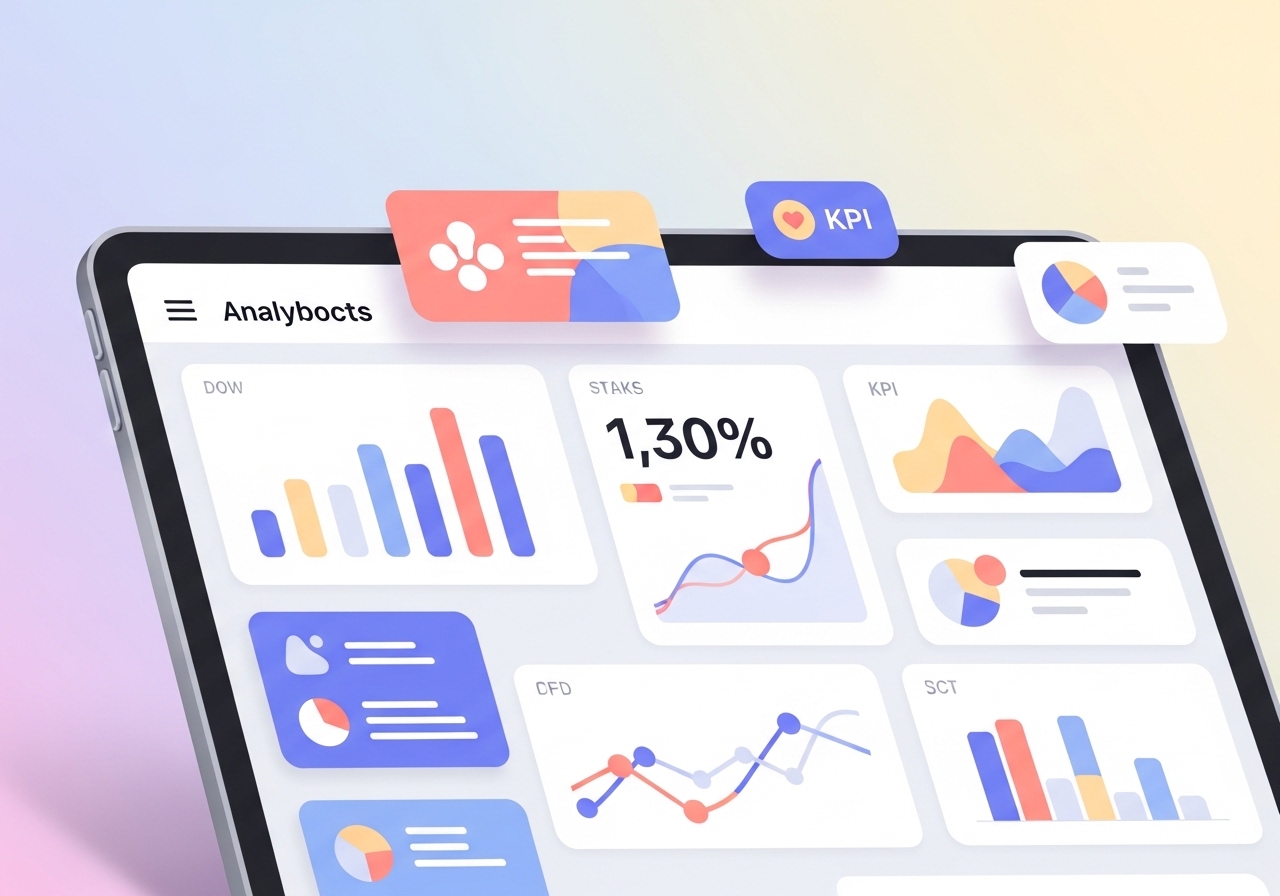
Key Metrics to Track
- Brand Awareness: Monitor metrics like website traffic, social media reach and impressions, and brand search volume. Surveys can also measure brand recall and recognition.
- Audience Engagement: Look at likes, shares, comments, click-through rates (CTR), and time spent on page. These indicate how well your message is resonating with your audience.
- Lead Generation and Conversions: Track the number of new leads, conversion rates on landing pages, and the cost per acquisition (CPA). Use attribution modeling to understand which channels are contributing most to conversions.
- Customer Lifetime Value (CLV): An effective IMC strategy should not only acquire new customers but also retain them. An increasing CLV suggests your consistent messaging is building loyalty.
Using Automation to Maintain a Cohesive Message
Manually coordinating content across a dozen channels is a significant challenge, especially for lean marketing teams at agencies and SaaS companies. Ensuring every blog post, social media update, and email newsletter adheres to the same core message requires constant oversight. This is where automation becomes a critical tool for implementing an IMC strategy successfully.
Platforms that automate content creation and distribution can help maintain brand consistency at scale. By using a central system to plan, generate, and publish content, you can ensure your tone of voice, keywords, and messaging pillars are always aligned. For instance, many modern AI SEO services can produce blog content that directly supports the messaging in your paid ad campaigns, creating a truly integrated experience for users discovering you through organic search. Automation removes the friction of manual coordination and frees up your team to focus on high-level strategy rather than repetitive execution.
Maintaining a consistent, high-quality content pipeline is fundamental to any integrated marketing communications strategy. But the research, writing, and optimization can consume hundreds of hours. Ascend automates your entire blog content strategy right inside WordPress. From keyword research and content calendars to writing and publishing daily, on-brand articles, Ascend handles the work so you can focus on growth. See how you can build organic traffic on autopilot. Learn more about Ascend.
Written by
Ascend
Ascend is an automated SEO engine for WordPress. It handles keyword research, writes high-quality, search-optimized content, and publishes it directly to your site, so your traffic can grow on autopilot. Learn more