
7 Actionable Small Business Social Media Marketing Strategies
For many marketing teams, developing a successful small business social media marketing plan can feel like a moving target. With platforms constantly changing and audiences demanding authentic connection, simply posting content is not enough. A strategic approach is required to turn social media from a daily chore into a reliable engine for traffic, leads, and customer loyalty. The key is to focus on sustainable practices that build a genuine community around your brand.
By implementing a clear framework, you can create a consistent presence that resonates with your ideal customers and supports your broader business objectives. These seven strategies provide a practical roadmap for building, managing, and measuring an effective social media presence that delivers tangible results.
Define Your Niche Audience Before You Post
Effective social media begins with a deep understanding of your audience. Move beyond basic demographics to identify their specific pain points, online behaviors, and preferred content formats. Without a clear picture of who you are talking to, your content will likely miss the mark. A well-defined audience profile guides every decision, from the platforms you choose to the tone of voice you adopt.
Start by creating detailed customer personas. These fictional representations of your ideal buyers should include information about their job titles, daily challenges, and motivations. According to Sprout Social, a deep understanding of your audience is a foundational step in building any social media strategy. Consider these questions to build out your personas:
- What are their biggest professional or personal challenges that your product or service helps solve?
- Which social media platforms do they use for professional networking versus personal interests?
- What kind of content do they engage with most? (e.g., educational articles, short-form video, case studies, infographics)
- What is their preferred communication style? (e.g., formal and data-driven, or casual and conversational)
Use tools like Google Analytics, social media platform analytics, and customer surveys to gather this data. Analyzing the followers of your direct competitors can also provide valuable insights into the audience you want to attract.
Create a Content Pillar Strategy, Not Just Random Posts
Develop several core themes, or pillars, relevant to your expertise and audience needs. Consistently creating content around these pillars builds authority and ensures your messaging stays on track. Instead of scrambling for post ideas each day, a pillar strategy provides a structured framework that guides content creation and keeps your feed focused and valuable. This approach is central to creating a coherent message and reinforces your overall brand marketing strategy.
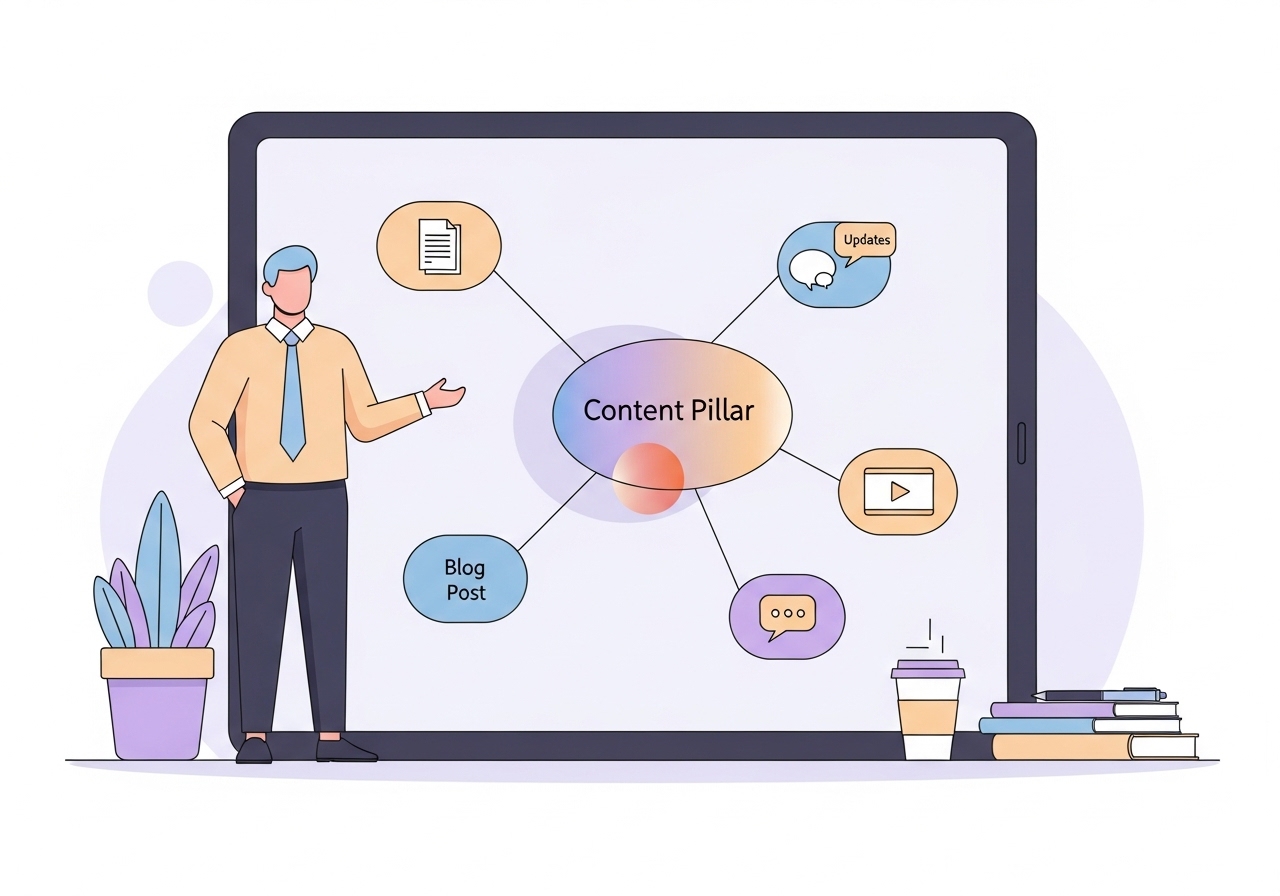
A content pillar is a broad topic that you can break down into many smaller, related pieces of content. For example, a marketing agency might have pillars like:
- SEO Best Practices: This could generate posts about keyword research, on-page optimization, backlink strategies, and technical SEO audits.
- Client Success Stories: This pillar allows for case studies, testimonials, and spotlights on client growth.
- Agency Culture and Team: Content here can showcase your team members, share behind-the-scenes looks, and attract new talent.
Each pillar should be directly tied to your business goals and the interests of your target audience. This method not only simplifies content planning but also helps establish your company as a go-to resource in its niche.
Choose Platforms Where Your Customers Actually Spend Time
Spreading your resources too thin across every social network is inefficient. Research and identify the 1-3 platforms where your target audience is most active and engaged, then focus your efforts there. Each platform has its own unique user base, content style, and algorithm. Mastering one or two channels is far more effective than maintaining a mediocre presence on five or six.
To identify the right platforms, consider the following:
- B2B vs. B2C: B2B companies often find success on LinkedIn, where they can connect with industry professionals and decision-makers. B2C brands may get more traction on visual platforms like Instagram, Pinterest, or TikTok.
- Content Format: If your brand excels at creating high-quality video, YouTube and TikTok are logical choices. If you produce long-form written content and infographics, LinkedIn and Pinterest might be better fits.
- Audience Demographics: Use data from sources like Pew Research Center to understand the age, gender, and income distributions of users on different platforms. Align this data with your customer personas.
Once you’ve chosen your platforms, tailor your content to fit the expectations of each one. A professional case study that performs well on LinkedIn will need a completely different presentation to work as an Instagram Reel.
Prioritize Community Engagement Over Vanity Metrics
Likes and follower counts can be misleading. Focus on building a community by responding to comments, asking questions, and starting conversations that provide genuine value. True engagement creates loyal followers who trust your brand and are more likely to become customers. An active community is a sign of a healthy brand, while a large but silent following offers little business value.
Effective community management involves more than just responding to comments. It’s a proactive effort to foster a sense of belonging. Oklahoma State University Extension highlights that social media is a powerful tool for building customer trust and connection. Here are some ways to build an engaged community:
- Ask Open-Ended Questions: Instead of just broadcasting information, prompt your audience to share their opinions, experiences, and ideas.
- Respond Promptly and Thoughtfully: Acknowledge all legitimate comments and messages. A personalized response shows that you are listening and value your audience’s input.
- Feature Your Followers: Share user-generated content or highlight a customer’s comment. This makes your audience feel seen and appreciated.
- Go Live: Live video sessions for Q&As, tutorials, or behind-the-scenes tours can create a direct and personal connection with your audience.
Streamline Your Small Business Social Media Marketing with Automation
Use scheduling and analytics tools to maintain a consistent posting schedule and gather performance data efficiently. This frees up time to focus on creative strategy and community interaction. Automation, when used correctly, is not about removing the human element but about handling repetitive tasks so you can invest your energy where it matters most: engaging with your audience.

Many marketing agencies and SaaS businesses already use a variety of essential tools to grow their operations, and social media management platforms fit perfectly into that ecosystem. These tools can help you:
- Schedule Posts in Advance: Plan out your content calendar for weeks or even months, ensuring a consistent flow of content without daily manual effort.
- Optimize Posting Times: Many platforms can analyze your audience’s activity and suggest the best times to post for maximum visibility and engagement.
- Consolidate Analytics: Track performance across multiple platforms from a single dashboard, making it easier to identify trends and report on results.
- Manage Social Inboxes: Handle comments and direct messages from all your channels in one unified inbox, improving response times.
Track Key Performance Indicators That Align with Business Goals
Measure what matters by tracking metrics that directly impact your objectives, such as website clicks, lead generation form fills, and conversion rates from social channels. It is easy to get lost in social media data, but focusing on the right key performance indicators (KPIs) ensures your efforts are contributing to the bottom line. The KPIs you choose should reflect what you want to achieve with your social media marketing.

Instead of focusing solely on vanity metrics, prioritize KPIs tied to different stages of the marketing funnel:
- Awareness: Metrics like reach and impressions show how many people are seeing your content.
- Engagement: Track comments, shares, and saves to gauge how well your content is resonating with your audience.
- Conversion: Monitor click-through rate (CTR), cost-per-click (CPC), and conversion rate to understand how many people are taking a desired action, like visiting your website or signing up for a newsletter. Use UTM parameters in your links to accurately attribute traffic and conversions to specific social media campaigns.
Regularly review these KPIs to understand what’s working and what isn’t. This data-driven approach allows you to refine your strategy over time, allocating more resources to the tactics that produce the best results.
Amplify Your Reach with User-Generated Content
Encourage customers to share photos and experiences with your products or services. Reposting this content acts as powerful social proof and strengthens your brand’s community. User-generated content (UGC) is often seen as more authentic and trustworthy than brand-created content. When potential customers see real people using and enjoying your products, it builds credibility in a way that traditional advertising cannot.
There are several ways to encourage and leverage UGC:
- Create a Branded Hashtag: Develop a unique and memorable hashtag for your customers to use when they post about your brand. This makes it easy to find and collect all related content.
- Run a Contest or Giveaway: Ask followers to submit a photo or video featuring your product for a chance to win a prize. This can generate a large volume of UGC in a short amount of time.
- Build it Into the Post-Purchase Experience: In your follow-up emails after a customer makes a purchase, ask them to share their experience on social media and tag your brand.
Always ask for permission before reposting a customer’s content on your official channels. Give them proper credit by tagging their account in the caption. This not only respects their ownership but also strengthens the relationship with your most enthusiastic brand advocates.
Managing a strategic, consistent content plan for social media and your blog requires significant time and resources. From keyword research to writing and publishing, the daily demands can pull your team away from other critical tasks. Ascend fully automates your blog content creation right inside WordPress. It learns your brand, creates a content calendar, and publishes a high-quality, SEO-optimized post every day, freeing you to focus on growth. See how Ascend can handle your content marketing at ascend.cv.
Written by
Ascend
Ascend is an automated SEO engine for WordPress. It handles keyword research, writes high-quality, search-optimized content, and publishes it directly to your site, so your traffic can grow on autopilot. Learn more