
What Is a Blog Post? A Complete Guide for Modern Marketers
A blog post is an individual article, guide, or piece of content published on the blog section of a website to inform, educate, or entertain a target audience. For businesses, agencies, and SaaS companies, it is a fundamental tool in a content marketing strategy designed to attract organic traffic, build brand authority, and generate leads. While formats vary, most posts combine text, images, and links to address a specific topic or answer a question for the reader.
Breaking Down the Anatomy of a Blog Post
While the topic and tone can change, effective blog posts share a common structure. Understanding these components is the first step toward creating content that resonates with readers and performs well in search results. Each element has a specific job, from grabbing attention to guiding the reader toward a desired action.
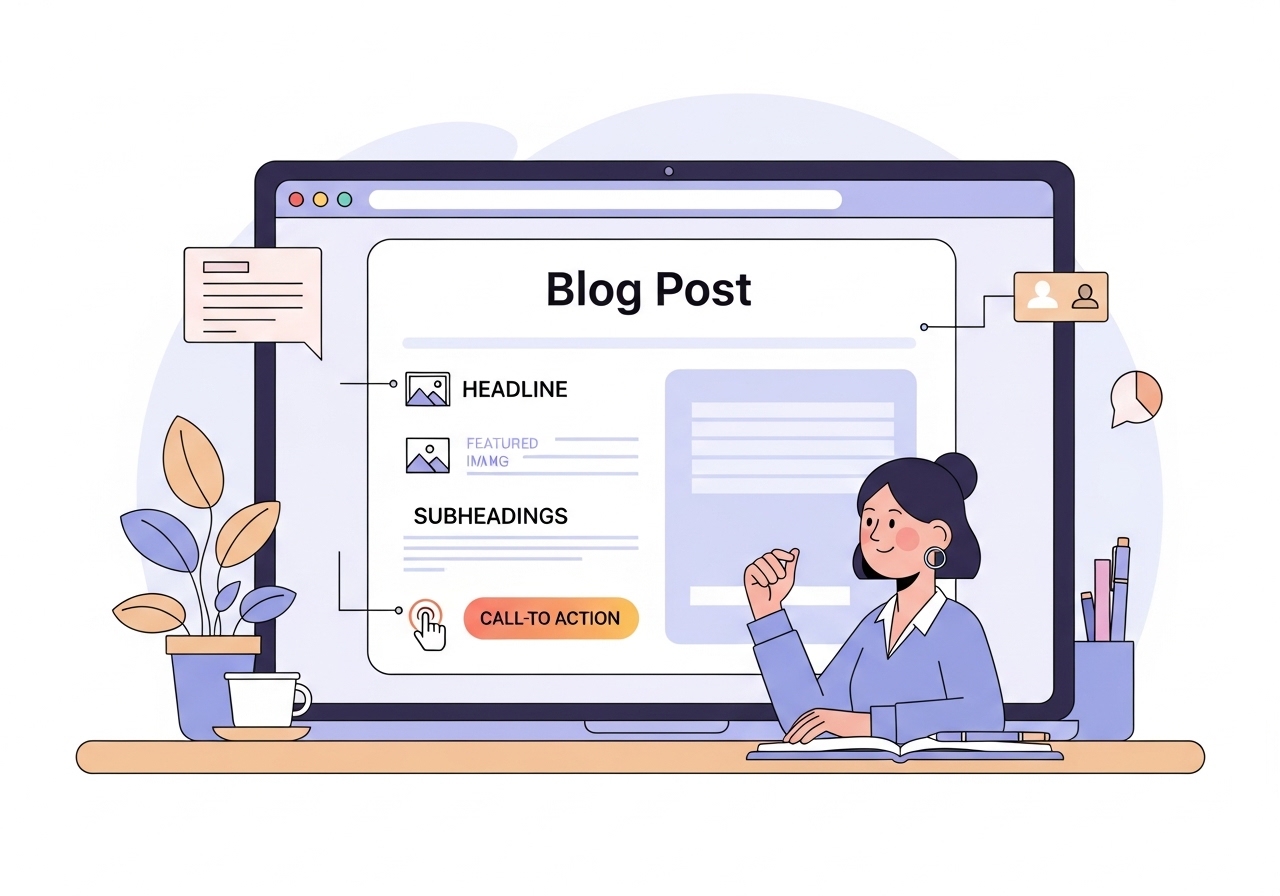
Here are the core parts of a typical blog post:
- Headline: The title of your post. Its primary goal is to capture interest and clearly state what the article is about, compelling users to click from a search engine results page or social media feed.
- Introduction: The opening paragraph or two. A strong introduction hooks the reader, provides a direct answer to their query, and sets expectations for what they will learn.
- Body: This is the main content of the article where you explore the topic in detail. The body should be well-organized and broken into logical sections using subheadings. This is where effective persuasive writing techniques come into play to keep the reader engaged.
- Subheadings (H2s, H3s): These smaller headlines organize the body content into scannable sections. According to the University of Wisconsin-Madison Writing Center, clear headings help readers navigate the content and improve SEO by signaling the article’s structure to search engines.
- Visuals: Images, infographics, charts, and embedded videos make the content more engaging and can help explain complex concepts. They also break up long blocks of text, improving readability.
- Call to Action (CTA): A concluding instruction to the reader that encourages them to take a specific next step. This could be anything from downloading a resource or signing up for a newsletter to requesting a product demo.
Why Blog Posts Are Essential for Your Content Strategy
For modern marketing agencies and SaaS companies, a blog is not just a place for company updates. It is a powerful engine for growth. Consistently publishing high-quality blog posts can have a significant impact on nearly every key marketing metric, transforming your website from a simple digital brochure into a dynamic lead-generation asset.

A strategic blogging effort helps you:
- Drive Organic Traffic: Every blog post is another indexed page on your website, creating a new opportunity to rank in search engines for relevant keywords. By answering the questions your potential customers are asking, you attract qualified traffic directly to your site. This forms the foundation of a successful SEO strategy, which can be amplified with AI-powered SEO services.
- Build Trust and Authority: Publishing insightful, well-researched content establishes your brand as an expert in your field. When you consistently provide value, prospects and customers begin to trust your advice, making them more likely to choose your solution when they are ready to buy.
- Generate Qualified Leads: Blog posts are excellent platforms for lead-generation offers. By including CTAs for gated content like e-books, webinars, or case studies, you can convert anonymous website visitors into named leads for your sales team to nurture.
- Support Social Media Efforts: Blog content gives your team valuable material to share across social media channels. It fuels conversations, drives engagement, and directs followers back to your website, creating a virtuous cycle of content distribution.
- Enable Internal Linking: A healthy library of blog content allows you to create internal links between related articles. This helps search engines understand your site structure and passes authority between pages, which can improve the rankings of your most important pages.
Common Blog Post Formats and When to Use Them
Not all blog posts are created equal. The format you choose should align with your specific goal for that piece of content. Selecting the right structure makes your information more accessible to the reader and more likely to achieve its marketing objective. Here are some of the most common formats:
- How-To Guides: These posts provide step-by-step instructions on how to complete a specific task. They are excellent for SEO because they directly answer user questions and target long-tail keywords. Use them to demonstrate your product’s value or share industry expertise.
- Listicles: Articles structured as a list (e.g., “7 Ways to…” or “9 Essential Tools…”) are highly scannable and easy to digest. Their straightforward format makes them very shareable on social media and effective for driving top-of-funnel traffic.
- Case Studies: A case study tells the story of how a specific customer successfully used your product or service. This format is powerful for building social proof and helping prospects in the consideration phase visualize their own success.
- Thought Leadership Articles: These posts present a unique perspective, opinion, or prediction about your industry. They are designed to build authority and start conversations, positioning your brand as a forward-thinking leader.
- Comparison Posts: These articles compare two or more products, strategies, or tools (e.g., “Tool A vs. Tool B”). They are very effective for capturing bottom-of-funnel traffic from prospects who are actively making a purchasing decision.
- Newsjacking Posts: This format involves capitalizing on a current news story or trend to insert your brand into the conversation. When done well, it can generate a burst of traffic and media attention.
What Is a Blog Post’s Role in the Marketing Funnel?
A successful content strategy uses different types of blog posts to engage potential customers at every stage of their journey. By mapping your content to the marketing funnel, you can guide prospects from initial awareness to a final purchasing decision, providing the right information at the right time.
Top of the Funnel (ToFu): Awareness
At this stage, your audience is experiencing a problem but may not know how to describe it or what solutions exist. Content here should be educational and broad. The goal is to attract a large audience and introduce them to your brand as a helpful resource. Blog posts like “What is…” guides, explanations of industry trends, and high-level listicles are effective here.
Middle of the Funnel (MoFu): Consideration
Once a prospect understands their problem, they begin researching potential solutions. MoFu content is more specific and aims to help them evaluate their options. This is where you can position your product or service as a viable choice. Effective formats include detailed how-to guides, comparison posts, and webinars that showcase your expertise and solution in action.
Bottom of the Funnel (BoFu): Decision
At the bottom of the funnel, the prospect is ready to make a purchase. Content at this stage should build confidence and remove any final barriers. Case studies are perfect here, as they provide real-world proof of your product’s value. Product feature deep dives and customer testimonials also work well to convince a prospect that your solution is the best choice.
How to Streamline Your Blog Content Creation
The biggest challenge for most teams is not understanding what a blog post is, but producing them consistently. A typical workflow involves many steps: keyword research, topic ideation, outlining, drafting, editing, sourcing images, on-page SEO, and scheduling. This entire process, as outlined by marketing experts at Benchmark Email, can take hours for a single post.

For busy agencies and lean SaaS teams, this time investment is a significant barrier to scaling their content marketing efforts. The need for speed and quality often leads to burnout or inconsistent publishing, which undermines the entire strategy. This is where automation becomes essential.
Modern platforms are now using AI for marketing to automate workflows that were once entirely manual. Tools can now perform keyword research, generate a full content calendar, write high-quality drafts, create on-brand images, and handle publishing directly within your CMS. By automating the most time-consuming parts of the process, teams can focus on strategy and maintain a consistent publishing schedule that drives real results.
A blog post remains one of the most reliable and effective assets in a digital marketer’s toolkit. It’s a versatile piece of content that can attract visitors, educate prospects, and build the trust needed to turn them into customers. While the formats and topics may vary, its core purpose is to provide value. The primary challenge is producing this value at scale. By understanding the components of a great post and adopting tools to streamline creation, your team can build a powerful content engine that fuels sustainable growth.
Tired of the content treadmill? Ascend fully automates your WordPress blog content. From keyword research and calendar planning to writing and publishing a new, SEO-optimized post every day, Ascend handles the entire workflow. Stop spending hours on content and start seeing organic traffic growth. Learn how Ascend can build your content engine for you.
Written by
Ascend
Ascend is an automated SEO engine for WordPress. It handles keyword research, writes high-quality, search-optimized content, and publishes it directly to your site, so your traffic can grow on autopilot. Learn more