Understanding Subdomains and SEO: A Guide for Marketers
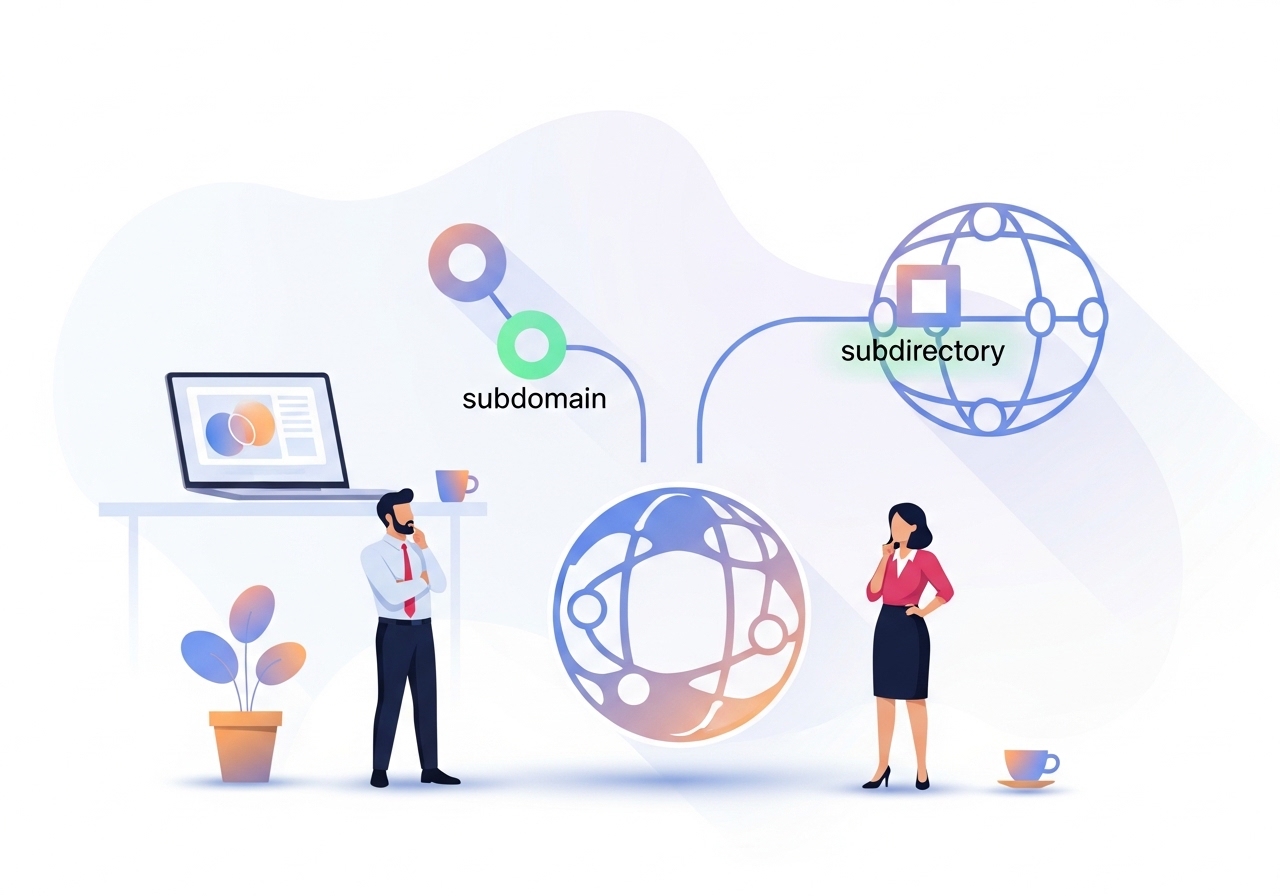
Subdomains are treated by search engines as separate websites from your root domain, which means they do not automatically share or inherit link authority. This distinction is the most critical factor in the relationship between subdomains and SEO, making subdirectories a better choice for most content marketing efforts aimed at consolidating domain strength.
Understanding your website’s architecture is fundamental to building a successful SEO strategy. One of the most common structural decisions marketers and developers face is whether to place content on a subdomain or in a subdirectory. While it might seem like a minor technical detail, this choice has significant consequences for how search engines crawl, index, and rank your content. This guide will clarify the difference between the two, explain the SEO implications, and help you decide which structure best aligns with your business goals.
What is a Subdomain?
A subdomain is a prefix added to your main domain name that acts as a separate section of your website. Think of your main domain (e.g., example.com) as a plot of land. A subdirectory (example.com/blog) is like adding a new room to your existing house on that land. A subdomain (blog.example.com), however, is like building a completely separate cottage on the same plot. It’s related and on the same property, but it’s a distinct structure.
Common examples you might see in the wild include:
- blog.website.com
- shop.website.com
- support.website.com
- app.website.com
Each subdomain can have its own unique design, content, and purpose. From a technical standpoint, it functions as an independent website, which is key to understanding its relationship with SEO.
The Impact of Subdomains and SEO
The core of the discussion around subdomains and SEO is how search engines like Google perceive them. For years, the consensus among SEO professionals, based on observation and statements from Google itself, is that a subdomain is largely treated as a separate entity. According to Google’s Search Central documentation, their systems try to understand the relationship between properties, but it’s not a guarantee.
This separation has a major consequence: link authority. Backlinks earned by your main domain do not automatically pass their full value to a subdomain, and vice versa. Each property must build its own authority from scratch. If your main site, example.com, has a high Domain Authority built over years, launching your blog on blog.example.com means that blog starts with very little of that authority. It must earn its own backlinks and establish its own credibility in the eyes of search engines.
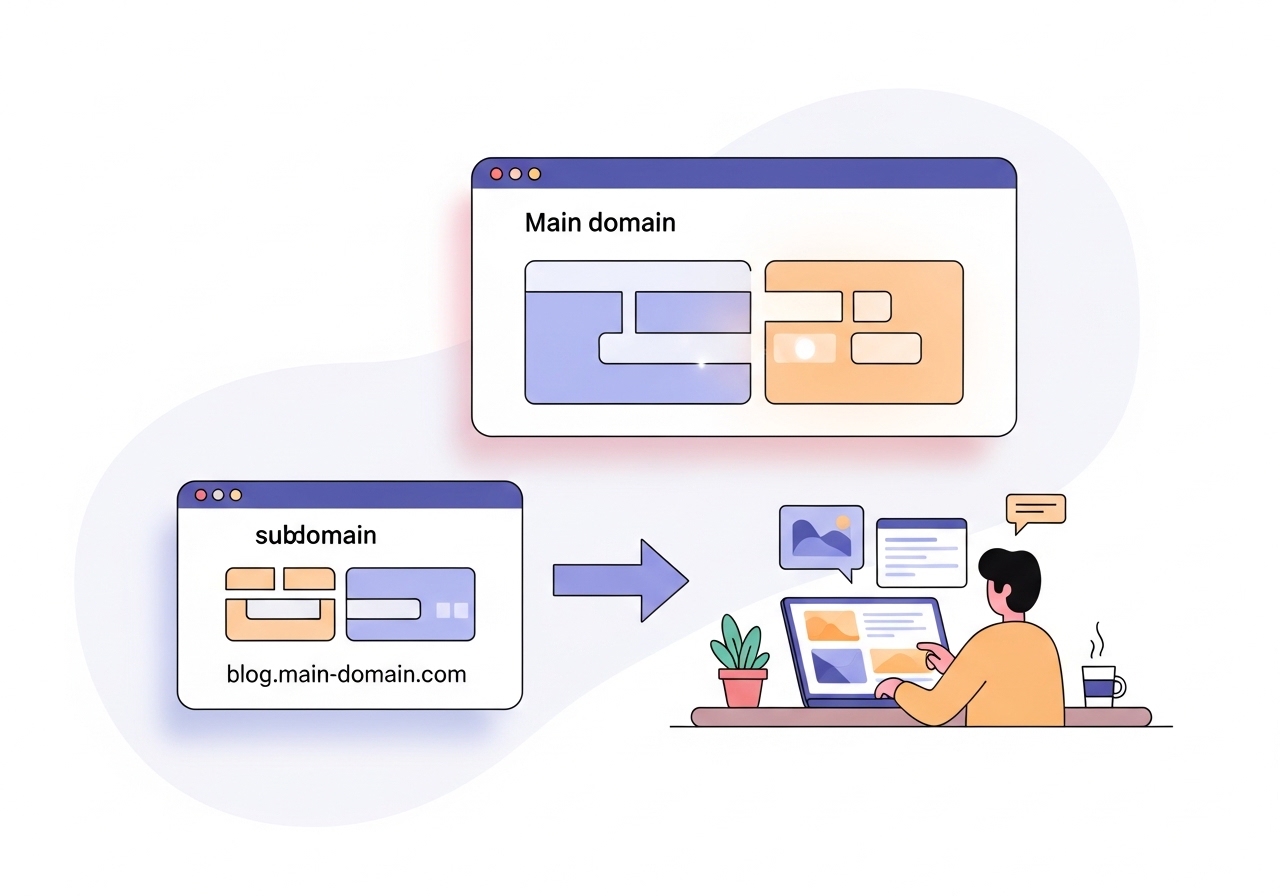
This creates a scenario where your content efforts are divided. Instead of all your content marketing strengthening one central domain, you are building up two separate properties. This can slow down your overall organic growth, as it’s often more difficult to build authority for multiple sites than it is for one.
When to Use a Subdomain for Your Content
Despite the SEO considerations, there are several valid strategic reasons to use a subdomain. These scenarios typically involve content or functionality that is fundamentally different from the core purpose of your main website.
- Distinct Business Functions: If you run an e-commerce store that is separate from your main corporate or marketing site, using
shop.example.commakes sense. The user intent is different (transactional vs. informational), and it may run on a completely different platform like Shopify. - Internationalization: For large global brands, using subdomains to target specific countries or languages (e.g.,
de.example.comfor Germany,fr.example.comfor France) can be effective. This allows you to host country-specific versions on local servers and tailor content for different markets. - Support Portals and Knowledge Bases: Customer support sections are often hosted on third-party platforms like Zendesk or Intercom. These services operate on a subdomain (e.g.,
support.example.com) by default. The audience and purpose are distinct from marketing content. - Web Applications: SaaS companies commonly host their software on a subdomain like
app.example.com. The application is a separate product from the marketing website that sells it. - Significant Brand Extensions: If a company launches a new product line or initiative with its own unique branding that is separate from the parent company, a subdomain can help create that distinction while maintaining a connection.

When to Use a Subdirectory Instead
For most content marketing purposes, a subdirectory (also known as a subfolder) is the preferred structure for maximizing SEO benefits. A subdirectory lives within your main domain, such as example.com/blog or example.com/resources.
The primary advantage is authority consolidation. Every piece of content you publish and every backlink you earn in a subdirectory directly contributes to the overall authority of your root domain. As industry experts often note, this creates a powerful flywheel effect: strong blog posts boost the authority of your main pages, and the authority of your main pages helps new blog posts rank faster.
Use a subdirectory for content that is closely related to your core brand and business offerings:
- The Company Blog: This is the most common and important use case. Housing your blog in a subdirectory ensures your content marketing efforts directly support your main site’s SEO.
- Resource Centers: For case studies, white papers, e-books, and guides that are meant to attract and educate your target audience.
- Specific Product or Service Pages: Detailed pages about features or solutions fit naturally within a subfolder structure (e.g.,
example.com/services/consulting).
By keeping this content on your main domain, you create a rich, authoritative hub of information that search engines value. It simplifies your analytics, makes site management easier, and is a key part of any strategy for scaling your content marketing effectively.
Key Considerations for Your Domain Strategy
Choosing between a subdomain and a subdirectory is a strategic decision that should not be taken lightly. Migrating from one to the other later can be a complex and risky process. Before you decide, consider these factors carefully.
Content’s Purpose and Audience
Is the content intended to directly support your main brand and attract your core customer base? If yes, use a subdirectory. If it serves a completely different function or audience (like a support portal for existing customers), a subdomain may be appropriate.
Branding and Identity
Does the section of your site need a distinct brand identity? If you’re launching a separate initiative that needs to stand on its own, a subdomain can provide that separation. Otherwise, a subdirectory keeps everything under one consistent brand umbrella.
Technical Constraints
Sometimes, the choice is made for you. If you rely on a third-party service for your help desk, e-commerce store, or application, you may be required to use a subdomain to point to their servers. In these cases, focus on creating strong internal links between the subdomain and your main domain to help search engines and users navigate between them.
Ultimately, your site architecture should be a deliberate choice. Reviewing these factors is one of many business improvement techniques that can have a lasting impact on your digital marketing performance. For most marketing agencies and SaaS companies focused on growth, the goal is to build a single, powerful domain. A subdirectory structure is almost always the best way to achieve that, ensuring every article and guide you publish contributes to a stronger, more visible brand online.
Managing SEO, content calendars, and site structure can quickly consume valuable time and resources. Ascend automates your entire blog content strategy, from keyword research to daily publishing, right inside WordPress. If you want to build domain authority and grow organic traffic without the manual effort, see how Ascend can help you publish high-quality, optimized content consistently. Learn more about Ascend.
Written by
Ascend
Ascend is an automated SEO engine for WordPress. It handles keyword research, writes high-quality, search-optimized content, and publishes it directly to your site, so your traffic can grow on autopilot. Learn more