Subdomains and SEO: How to Structure Your Site for Growth
Subdomains can significantly impact SEO because search engines often treat them as separate websites from your main domain. This separation affects how authority, keywords, and traffic are attributed to your online presence. Understanding this relationship is essential for making informed decisions about your site’s architecture.
How Search Engines Treat Subdomains
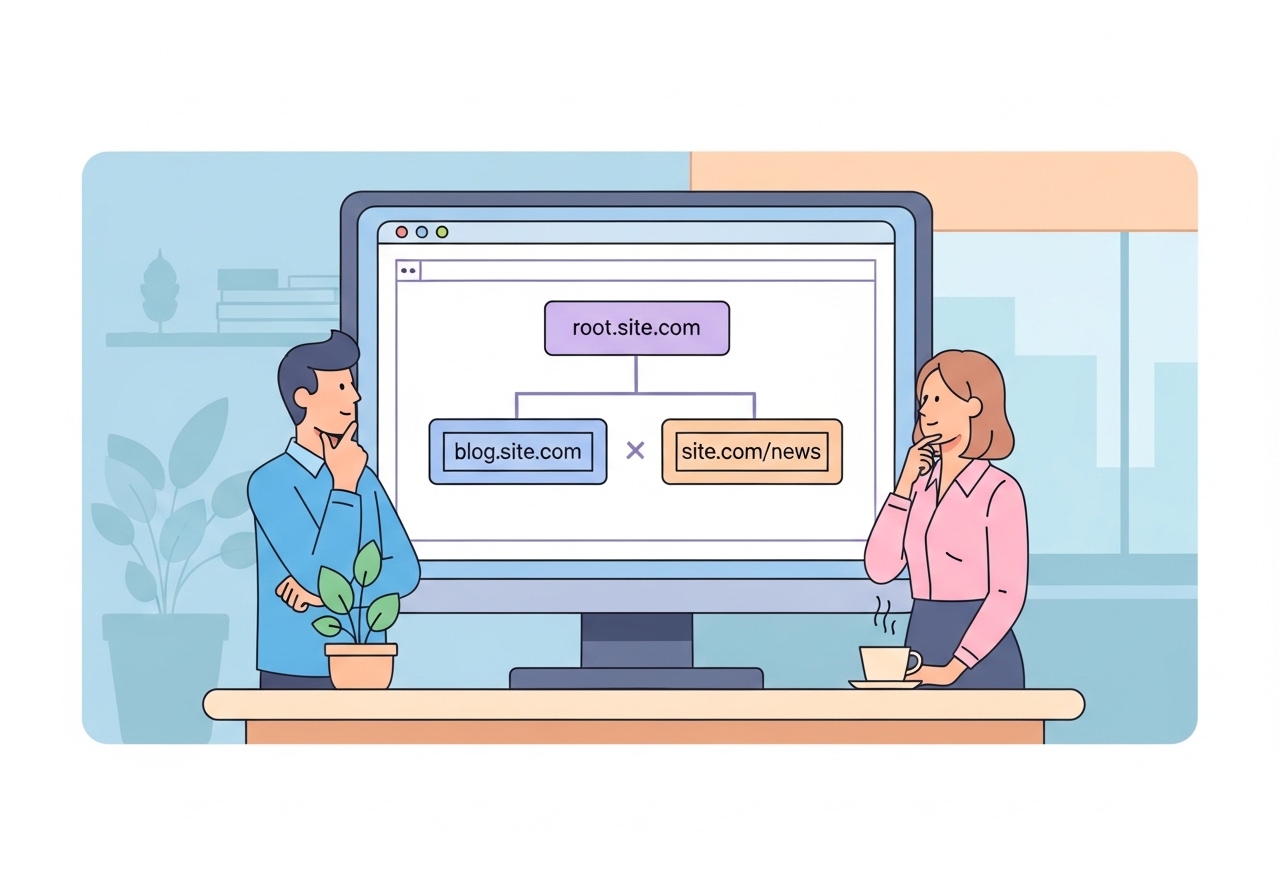
A subdomain is a prefix added to your root domain name, creating a distinct section of your website. For example, in blog.yourcompany.com, “blog” is the subdomain of the root domain yourcompany.com. While technically part of the same domain, search engines like Google have historically treated subdomains as independent entities. This means a subdomain often needs to build its own authority and rankings from the ground up.
While Google’s algorithms have become more sophisticated at associating a subdomain with its root domain, the default behavior is still to view them separately. This is a critical distinction when planning your content strategy. Any link equity or authority your main site has acquired will not automatically transfer to a new subdomain. As a result, keywords can become diluted across multiple domains, making it harder for any single property to rank for competitive terms.
The Core Debate: Subdomains vs. Subdirectories
The alternative to a subdomain is a subdirectory (also known as a subfolder). A subdirectory lives in a folder on your main domain, like yourcompany.com/blog. From an SEO perspective, this is a very different approach, and understanding the contrast is key to structuring your site effectively.
- Subdirectories (
yourcompany.com/blog): Content in subdirectories is seen by search engines as part of the main website. This structure helps consolidate your SEO authority. All backlinks and content contribute to the strength of the single root domain. Because of this consolidation, many experts consider using subdirectories for core content an SEO best practice. For marketing agencies, keeping the blog in a subdirectory on the main site is often the best way to demonstrate expertise and build a single, powerful domain. - Subdomains (
blog.yourcompany.com): Content on a subdomain is treated as a separate site. This can split your SEO authority, as backlinks to the subdomain do not directly boost the root domain, and vice versa. This structure fragments your ranking signals, requiring you to build authority for two separate web properties. It can be a valid strategy, but it requires a conscious decision and dedicated resources.
For most businesses aiming to build a strong, unified brand presence, a subdirectory is the safer and more effective choice for their main content marketing efforts. It simplifies SEO and ensures every piece of content contributes to a single, authoritative domain.
When Using a Subdomain Makes Strategic Sense
Despite the SEO advantages of subdirectories, there are specific situations where using a subdomain is a logical and necessary choice. The decision often comes down to separating content that serves a completely different function or audience from your primary marketing site.

- Distinct Business Units or Product Lines: If your company operates several very different brands or services, subdomains can provide clear separation. For example, a tech company might have
api.company.comfor developers andshop.company.comfor merchandise. Each serves a unique audience with different goals. - International Websites: Using subdomains for different countries or languages (e.g.,
uk.yourcompany.comorfr.yourcompany.com) is a common way to manage international SEO and provide localized content. This helps search engines serve the correct version of your site to users in different regions. - Customer Support and Help Centers: Support portals, like
help.yourcompany.com, often contain technical documentation or user-generated content that has a different purpose than marketing content. Separating it can keep your main site focused on conversions and avoid mixing different types of search intent. - Special Events or Campaigns: For a temporary marketing campaign or event, a subdomain like
event2024.yourcompany.comcan be an effective way to host a microsite without cluttering your main domain. It can have its own branding and be easily archived after the event. - Technical Limitations: Sometimes, a third-party service or a specific content management system requires a subdomain to function correctly. In these cases, the technical need may override the SEO preference.
Understanding the SEO Risks of Subdomains
If you choose to use a subdomain, it is important to be aware of the potential SEO challenges. The primary risk is the dilution of domain authority. Because search engines treat the subdomain as a new site, it won’t benefit from the established trust and backlink profile of your root domain. You will need to build its authority independently, which essentially doubles your SEO workload.
This separation also means you must invest more resources. You will need to manage SEO efforts, including keyword research, link building, and technical optimization, for each subdomain as a standalone project. This ultimately makes the choice of subdomain versus subdirectory a business decision, not just a technical one. It can strain marketing teams, especially in small to medium-sized businesses where time and budget are limited. The challenge is similar to agencies trying to scale their offerings; you have to ensure the structure you build is sustainable. This requires a solid plan for selling and managing your content services profitably without creating unnecessary overhead.
Best Practices for Managing Subdomains and SEO
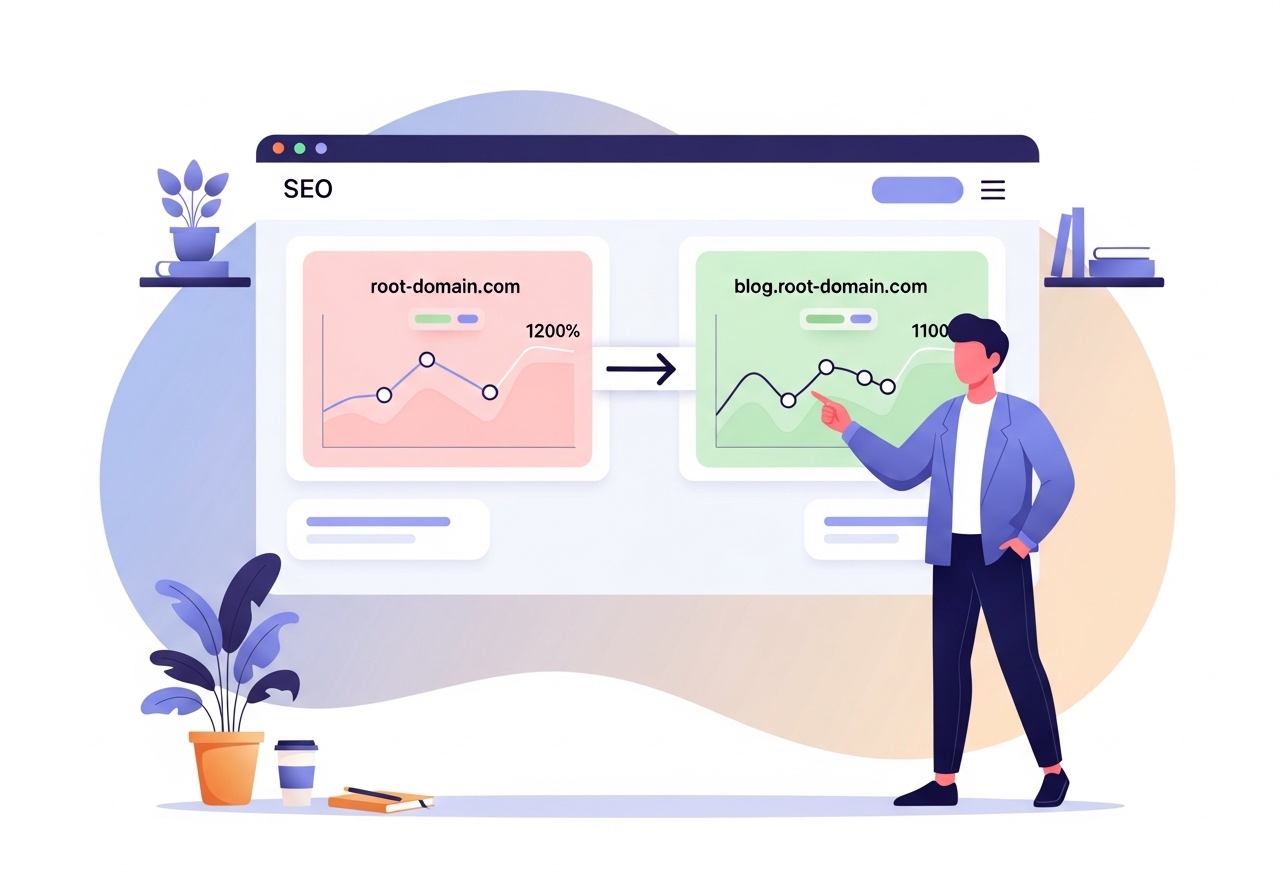
If a subdomain is the right choice for your strategy, you can take steps to mitigate the SEO risks and create a cohesive user experience. Proper management can help search engines understand the relationship between your properties and ensure each one performs optimally.
- Establish Strong Internal Links: Create clear and logical navigation between your main domain and your subdomain. Use footer links, top navigation menus, and contextual in-text links to guide both users and search engine crawlers between the properties. These links help search engines understand the relationship and pass some link equity.
- Create High-Quality, Unique Content: The content on your subdomain must provide distinct value. You can target different keywords that your main domain might not cover. Avoid duplicating topics or content from your main site, as this can confuse both users and search engines and lead to keyword cannibalization.
- Monitor Performance Separately: Set up a unique property in Google Search Console for each subdomain. This allows you to track its individual performance, including clicks, impressions, and keyword rankings. By doing so, you can build much clearer SEO reports for your clients or internal stakeholders, demonstrating the specific value each web property provides.
- Maintain Consistent Branding: Ensure the visual design, tone of voice, and overall user experience are consistent across your root domain and all subdomains. A cohesive brand experience builds trust and helps users feel secure as they navigate between different sections of your online presence.
Making the Right Structural Choice for Your Business
The decision between subdomains and SEO is not about which is universally “better,” but which is right for your specific goals. For most content that is integral to your marketing and brand-building efforts, such as your main blog or resources section, a subdirectory is the recommended path. It consolidates authority and simplifies your SEO management.
However, when you need to separate content for functional, technical, or branding reasons, a subdomain is a perfectly valid tool. The key is to make a deliberate choice based on your strategy and commit the necessary resources to manage it effectively. Audit your content goals and technical constraints to determine the architecture that will best support your long-term growth.
Whether you choose subdomains or subdirectories, creating consistent, high-quality content is what drives organic traffic. Ascend fully automates your WordPress blog, from keyword research and content calendars to writing and publishing daily posts. Stop spending hours on content management and start growing on autopilot.
Written by
Ascend
Ascend is an automated SEO engine for WordPress. It handles keyword research, writes high-quality, search-optimized content, and publishes it directly to your site, so your traffic can grow on autopilot. Learn more