
The Agency Guide to Performance Marketing Strategy and Execution
Performance marketing is an operational framework where advertisers pay media channels and agency partners only after specific, measurable commercial events occur. Unlike institutional brand advertising, which allocates capital toward unquantifiable awareness metrics such as gross rating points or generalized reach, performance marketing requires immediate accountability. Capital deployment links directly to verified business outcomes, including completed retail purchases, verified B2B lead submissions, software trial registrations, and mobile application downloads.
Defining Performance Marketing and Its Commercial Foundations
At its core, performance marketing treats advertising not as a speculative overhead expense, but as a direct driver of unit revenue. The commercial agreement establishes a clear mechanism: if an ad delivery network or distribution partner fails to produce the designated outcome, the advertiser incurs zero financial liability for that conversion event.
This operational model separates direct-response marketing from broader brand campaigns across three critical dimensions:
Verifiable Transaction Triggers: Media spend clears only when user actions hit concrete endpoints, such as a checkout confirmation or a validated CRM lead status.
Direct Financial Attribution: Every dollar spent connects to a specific campaign, creative asset, and audience cohort, allowing accurate calculation of return on ad spend (ROAS).
Agile Resource Reallocation: Marketers can scale underperforming or high-performing campaigns intraday based on real-time data feeds rather than waiting for quarterly post-campaign audits.
When aligning client expectations, distinguishing between strategy vs tactics prevents agencies from mistaking channel-level bidding mechanics for comprehensive business positioning. Performance tactics execute the broader acquisition strategy, ensuring that customer volume converts at unit economics that sustain long-term business health.
Commercial Value and Client Retention Drivers for Agencies
Service agencies that anchor their business model in performance marketing build stronger commercial relationships with their clients. Retainer disputes often happen because clients cannot trace agency work directly to gross revenue. When an agency ties its delivery directly to revenue generation, closed-won deals, or qualified pipeline volume, client conversations shift from subjective critiques of creative assets to objective evaluations of margin efficiency.
This dynamic significantly increases client retention rates during broader economic contractions. In budget-tightening cycles, finance departments look to eliminate unmeasured marketing expenditures first. Performance programs with clear customer acquisition cost (CAC) calculations and predictable returns reliably survive these cuts. Agencies with transparent reporting dashboards can prove that reducing their budget directly contracts top-line business revenue.
Performance alignment also gives agencies pricing power. Instead of competing on commoditized hourly rates, agencies can structure agreements around performance bonuses, value-based retainers, or hybrid contracts that combine baseline management fees with profit-sharing thresholds.
Core Mechanics and Pricing Models in Performance Marketing
Executing performance campaigns requires matching campaign objectives with appropriate pricing models across search networks, social ecosystems, programmatic display exchanges, and affiliate networks.
Commercial Pricing Models
Model | Commercial Definition | Primary Use Case | Primary Risk Factor |
|---|---|---|---|
Cost Per Click (CPC) | The advertiser pays when a user clicks an ad and lands on the designated web property. | Paid search, high-intent discovery queries, retail product listings. | Low-converting landing pages exhaust media spend without delivering backend sales. |
Cost Per Lead (CPL) | Payment triggers when a user submits verifiable contact information, like a form or demo booking. | B2B services, SaaS pipelines, professional advisory firms. | Lead quality degradation through bot activity or unvetted form fills. |
Cost Per Acquisition (CPA) | Billing is contingent on an end-user completing a checkout or signup transaction. | E-commerce, direct-to-consumer goods, transactional subscription services. | Higher media fees because platforms absorb downstream conversion friction. |
Revenue Sharing | The agency or affiliate collects a negotiated percentage of net sales generated. | Affiliate distribution networks, high-margin information and digital products. | Vulnerability to client-side sales cycle changes and refund processing. |
Technical Infrastructure and Verification Hooks
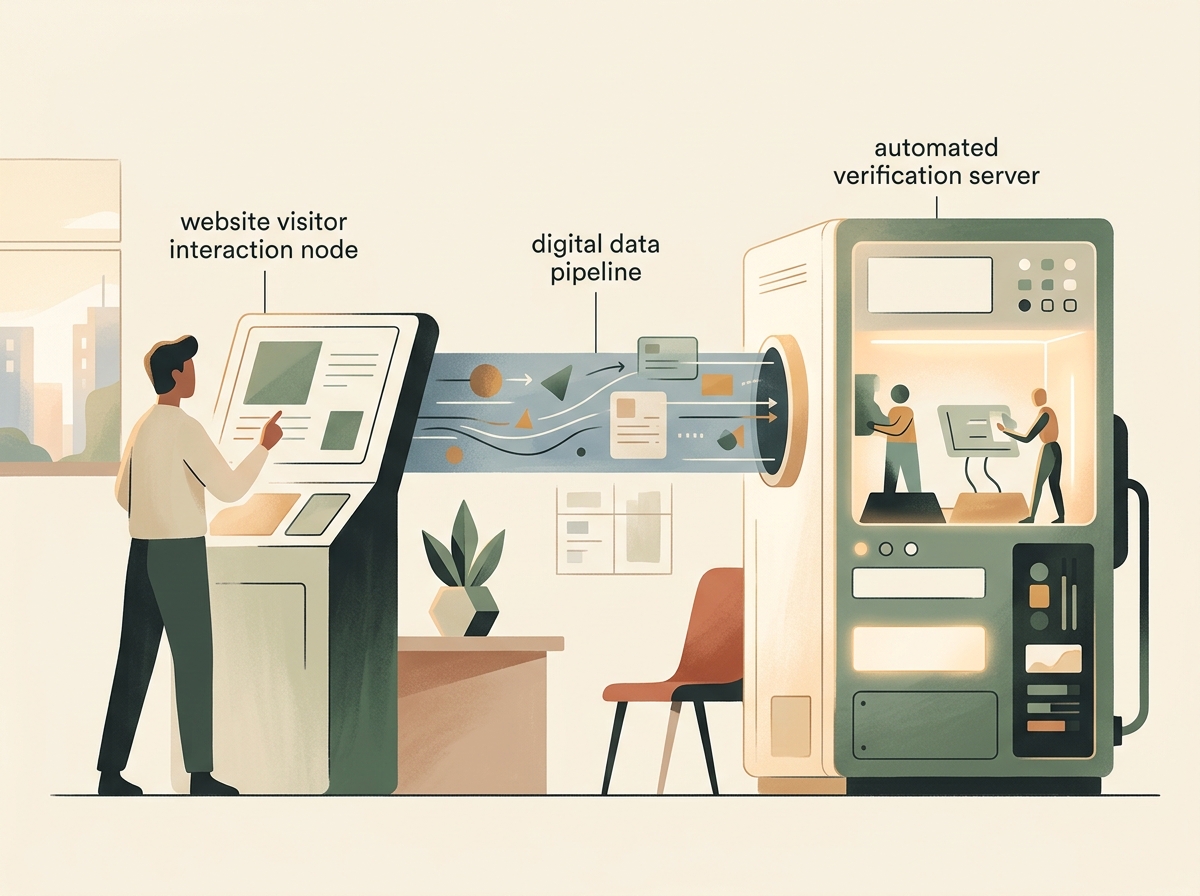
Modern performance marketing relies on robust technical tracking setups. Client-side browser pixels once carried the bulk of attribution duties, but modern tracking stacks require deep, server-level integrations to monitor performance accurately:
Server-Side Conversion APIs: Platforms pass conversion data directly from client web servers to advertising network endpoints, bypassing ad-blockers and browser-level tracking restrictions.
Server-to-Server Postback Hooks: External verification systems notify media distribution engines when transactions complete, sending transaction values and order IDs back to optimization platforms.
CRM Status Webhooks: B2B funnels feed qualified lead milestones back into search engines and paid platforms, helping automated bidding algorithms optimize for real sales rather than simple form fills.
Technical Limitations, Fraud Vectors, and Attribution Gaps
Performance marketing operates within a fragmented technical landscape. Agency operators must navigate ongoing signal loss, ad fraud, and structural attribution challenges that distort real campaign efficiency.

Signal Degradation and Privacy Updates
The phaseout of third-party cookies across modern browsers, combined with mobile privacy features like Apple's App Tracking Transparency, has reduced traditional tracking visibility. In-browser tracking scripts frequently fail to match users across devices, leading to underreported platform conversions and overinflated cost-per-acquisition figures. Agencies that rely entirely on native platform reporting often find that individual networks claim credit for conversions that originated elsewhere.
Ad Fraud and Artificial Traffic
Performance budgets naturally attract fraudulent actors attempting to siphon affiliate commissions and automated payouts. Common fraud schemes include:
Click Injection: Android malware that detects application downloads and triggers simulated clicks right before installation to steal attribution credit.
Cookie Stuffing: Illegitimate scripts that place affiliate tracking cookies in a visitor's browser without their knowledge, claiming unearned commissions on future purchases.
Bot Farm Manipulation: Scripted browser farms that submit fake lead forms to programmatic display ads, draining budgets set to cost-per-lead models.
Attribution Gaps
Relying exclusively on single-touch attribution models creates flawed budget allocations. Last-click attribution inevitably directs too much spend toward branded search queries and mid-funnel retargeting ads, while starving the top-of-funnel discovery campaigns that initially introduced the user to the brand. Conversely, first-touch attribution undervalues the conversion rate optimization and retargeting efforts that actually close sales. Agencies must integrate data-driven attribution models or marketing mix modeling (MMM) to account for full customer journeys across channels.
Step-by-Step Implementation Framework for Client Campaigns
Setting up performance marketing campaigns requires a structured approach to reduce risk and protect client capital. Following a disciplined deployment sequence prevents agencies from wasting media budgets on poorly configured campaigns.
Step 1: Calculate Viable Unit Economics and Acquisition Ceilings
Before launching any ad campaigns, calculate the client's break-even metrics and allowable customer acquisition cost (CAC). Use historical accounting metrics to establish firm boundaries:
Target CAC = (Gross Margin per Order * Average Order Value) - Target Profit Margin
For subscription businesses, calculate unit economics against realistic customer lifetime value (LTV) within a fixed 12-month payback window. If an agency operates without a clear acquisition cost ceiling, campaign optimization turns into guesswork.
Step 2: Build Redundant Server-Side Tracking Infrastructure
Never rely on a single client-side tracking pixel. Deploy a dual tracking setup that runs client-side triggers alongside server-side conversion APIs. Map every key conversion milestone, such as lead captures, trial starts, and paid checkouts, to a central data warehouse or analytics dashboard. Audit tracking tags before launch by running live test transactions and verifying that postbacks register correctly on all media endpoints.
Step 3: Run Validation Sprints with Controlled Media Budgets
Launch the initial campaign phase across one or two controlled channels to validate core assumptions. Limit budgets to strict daily spend caps. Keep the focus during this initial testing phase on two primary operational variables:
Creative Angle Resonance: Test distinct value propositions to find which angles produce the lowest cost per qualified click.
Landing Page Conversion Rates: Measure whether your post-click landing pages convert cold traffic at rates that align with your business unit economics.
Step 4: Scale Traffic Sources Horizontally and Vertically
Once baseline conversion rates stabilize and ad sets hit target acquisition metrics, expand campaign volume. Vertical scaling increases budget allocations to high-performing campaigns incrementally, keeping ad platform optimization loops steady. Horizontal scaling introduces new audiences, broader match types, and secondary media channels. To combat rising paid media costs, agencies must also know how to increase organic traffic to balance expensive customer acquisition with durable inbound pipelines.
Actionable Operational Takeaways for Agency Teams
To improve your performance marketing operations, execute these tactical measures across your client engagements:
Conduct First-Party Data Audits Before Committing Media Spend: Review every client's tracking infrastructure before running campaigns. Ensure server-side event tracking, CRM integrations, and data layers function properly, rather than relying on standard third-party browser cookies.
Include Margin Floors in Performance Contracts: Add contract clauses that index your agency fees against the client's actual unit margins. This step protects your agency from ad auction volatility and sudden inventory cost shifts.
Offset Paid Media with Automated Inbound Content: Balance paid ad spend by building strong organic traffic channels. Agencies that establish systems to scale content marketing build organic authority that permanently captures search volume. This blended approach reduces average customer acquisition costs, hedges against sudden ad network price increases, and ensures reliable lead volume for long-term campaigns.
Pairing performance advertising with organic search lowers client acquisition costs over time. Ascend helps agencies build automated organic pipelines by turning search strategy and audience research into daily, search-optimized articles that compound brand authority alongside your paid campaigns.
Written by
Ascend
Ascend is an automated SEO engine for WordPress. It handles keyword research, writes high-quality, search-optimized content, and publishes it directly to your site, so your traffic can grow on autopilot. Learn more