How to Build a Powerful Multi Location SEO Strategy
For marketing agencies, managing clients with multiple physical locations presents a unique set of challenges. A strategy that works for a single-storefront business often fails to scale, leaving local branches invisible to nearby customers. An effective multi location SEO strategy is not just about replicating efforts; it’s about creating a distinct and locally relevant presence for every single address. This approach ensures each location can capture its specific local market, driving foot traffic and conversions where it matters most.
This guide provides a structured, step-by-step process for building and executing a powerful SEO strategy for multi-location businesses. By following these steps, your agency can deliver consistent, measurable results for clients, improving their visibility in local search and strengthening their connection with local communities.
Step 1: Conduct Granular Keyword Research
The foundation of any successful SEO campaign is understanding what potential customers are searching for. For multi-location businesses, this requires a dual approach. You need to target broad keywords related to the business’s products or services and combine them with location-specific modifiers. Start by brainstorming primary terms (e.g., “financial advisor,” “emergency dental clinic”).
Next, append geographic terms for each business location. This includes city names, neighborhoods, and even “near me” searches. For example, a client in New York City could have locations that target “financial advisor manhattan,” “financial advisor upper east side,” and “financial advisor near grand central.” Use tools like Google Keyword Planner or Ahrefs to validate search volume and identify related terms. This granular research informs your content strategy for each location page and Google Business Profile, ensuring you attract the most relevant local traffic.
Step 2: Optimize Google Business Profiles
A Google Business Profile (GBP) is often the first interaction a potential customer has with a local business. For a multi-location enterprise, it’s critical to have a separate, fully optimized GBP listing for every single physical address. Claiming and verifying each location is the first step. After that, focus on consistency and completeness.
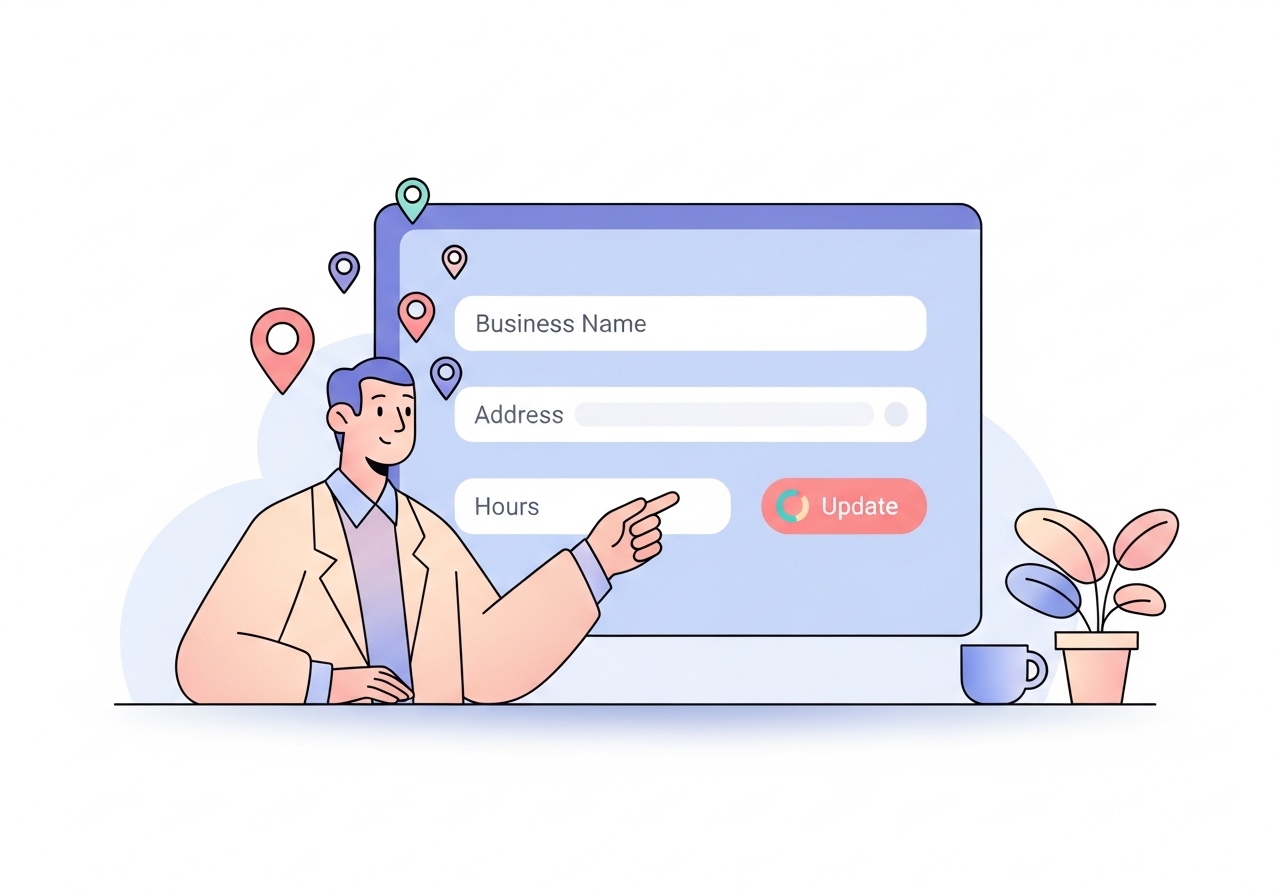
Ensure that the following information is accurate and uniform across all listings where appropriate, yet specific to each location:
- Business Name: Use the official brand name plus a location identifier if necessary (e.g., “Ascend Agency – Brooklyn”).
- Address: The exact, verifiable street address for that location.
- Phone Number: A unique local phone number for each branch. Avoid using a central call center number.
- Website: Link directly to the specific location page on the corporate website, not the homepage.
- Categories: Select the most accurate primary and secondary categories that describe the business.
- Hours: List the correct operating hours for each individual location.
- Photos and Videos: Upload high-quality images of the storefront, interior, team, and products for each location.
Regularly use Google Posts to share updates, offers, and events specific to each branch. This keeps the listings fresh and engaging for local searchers.
Step 3: Develop Unique Location Pages on Your Website
Each business location deserves its own dedicated page on your client’s website. This serves as the authoritative source of information for that specific branch and a primary destination for local search traffic. A common mistake is creating templated pages with only the city and address changed. This approach offers little value to users or search engines and can be seen as duplicate content.
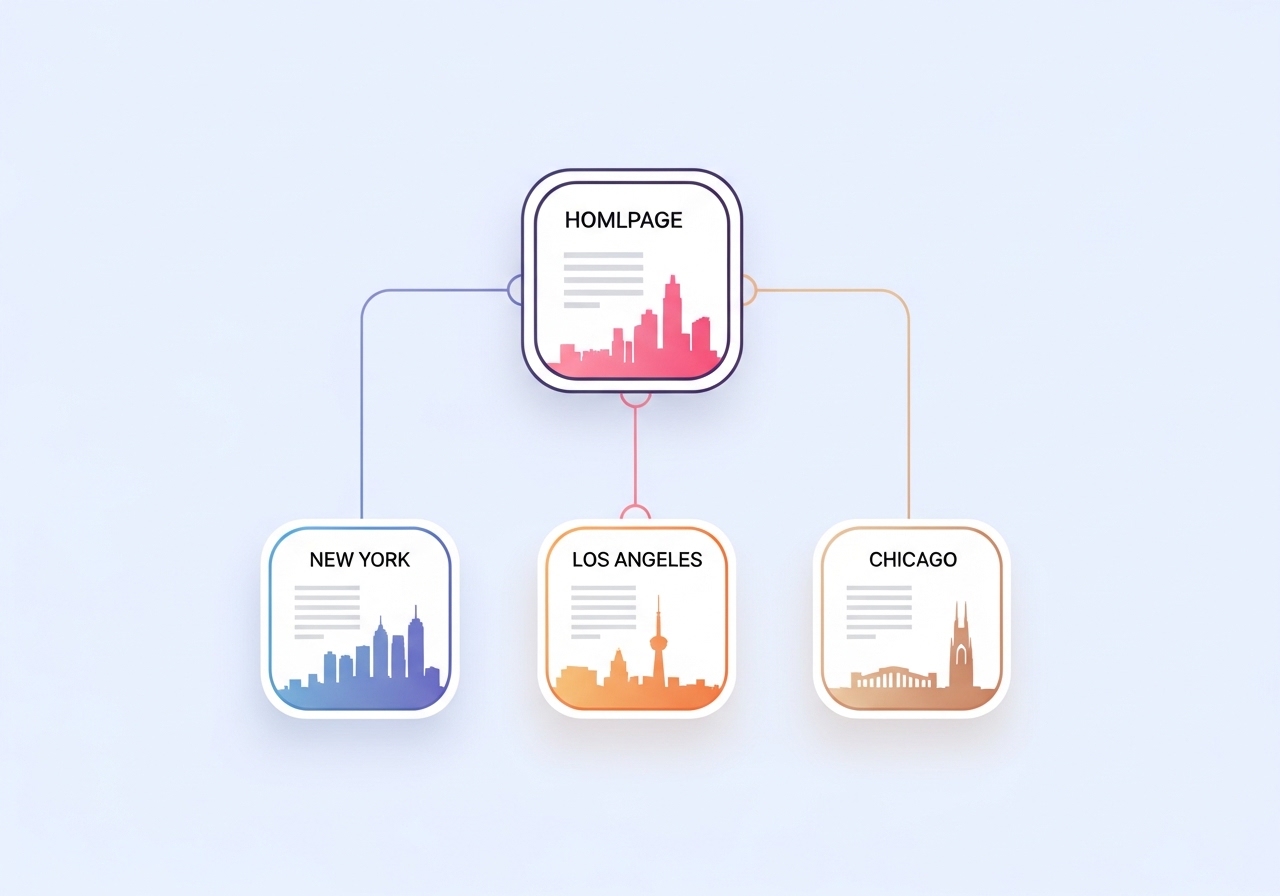
Instead, create rich, unique content for every location page. Each page should include:
- The location’s full Name, Address, and Phone number (NAP).
- An embedded Google Map.
- A unique description of the location, its history, or its neighborhood involvement.
- Photos or bios of key local staff members.
- Testimonials from customers specific to that location.
- Details about locally-offered services or products.
- Local event announcements or community news.
To produce this much unique content at scale, it helps to integrate AI copywriting into your workflow, which can help generate drafts that your team can then refine with local details.
Step 4: Standardize NAP and Build Local Citations
Consistency is fundamental to local SEO. Search engines trust businesses that have consistent information across the web. The most critical data points are the Name, Address, and Phone number (NAP). This information must be identical on your website, Google Business Profiles, and all other online directories and platforms.
A citation is any online mention of a business’s NAP. These appear in online directories like Yelp, Yellow Pages, and industry-specific sites. Each consistent citation builds trust with search engines and reinforces the validity of a business’s location. For a multi-location business, this means building citations for every individual branch. The process involves auditing existing citations for inaccuracies and then systematically building new ones. For agencies, this is a crucial but time-consuming task that is vital for a comprehensive multi location SEO strategy. A focused effort on building and managing SEO citations is essential for improving local search visibility.
Step 5: Implement a Review Management Strategy
Online reviews are a powerful ranking factor and a key driver of customer trust. A steady stream of recent, positive reviews on Google and other platforms signals to search engines that a business is active and valued by its community. Your strategy should focus on encouraging satisfied customers to leave feedback for the specific location they visited.

Equally important is how the business responds to reviews. Replying to both positive and negative feedback shows that the business is engaged and values customer input. For multi-location businesses, it’s best to have local managers or a designated team member respond to reviews to provide authentic, location-specific replies. This interaction builds customer loyalty and demonstrates excellent service to prospective clients who are researching the business.
Step 6: Use Local Business Schema Markup
Schema markup is a type of code that you can add to your website to help search engines better understand your content. For local businesses, this is a powerful tool. By implementing LocalBusiness schema on each location page, you can explicitly tell Google the NAP, hours, and other key details for each branch.
This structured data can help your client’s business appear in rich results, such as map packs or knowledge panels, which are highly visible in search results. While it’s a more technical aspect of SEO, using tools like Google’s Structured Data Markup Helper can simplify the process. Ensure that the schema markup on each page corresponds exactly to the information for that specific location.
Step 7: Monitor Performance and Report on Key Metrics
A successful multi location SEO campaign requires continuous monitoring and refinement. You need to track performance on a location-by-location basis to understand what’s working and where improvements are needed. Key metrics to monitor include:
- Local Search Rankings: Track keyword rankings for each location using geo-specific search settings.
- Google Business Profile Insights: Analyze how many people find each listing through search vs. maps, and what actions they take (website clicks, calls, direction requests).
- Website Traffic: Use Google Analytics to segment traffic to each location page and analyze user behavior.
- Conversions: Track contact form submissions, phone calls, and other conversion goals originating from each location page.
Presenting this data clearly is vital for demonstrating value to your clients. By creating a monthly SEO reporting process, you can show progress for each location and make data-driven decisions to adjust your strategy over time.
Managing SEO for a multi-location business requires a methodical and detailed approach. Each location must be treated as a unique entity with its own audience, opportunities, and data. By systematically optimizing Google Business Profiles, building unique location pages, ensuring NAP consistency, and managing reviews, your agency can drive significant local growth for clients. The key is to move beyond a one-size-fits-all strategy and embrace the local nuances that make each community different.
Managing dozens of location pages and publishing unique, locally-focused content every day can be overwhelming. Ascend fully automates your blog content creation right inside WordPress. From keyword research and content calendars to writing and publishing SEO-optimized posts, Ascend handles it all. Stop spending hours on manual content tasks and start growing organic traffic on autopilot.
See how Ascend can transform your content strategy. Discover a smarter way to scale content today.
Written by
Ascend
Ascend is an automated SEO engine for WordPress. It handles keyword research, writes high-quality, search-optimized content, and publishes it directly to your site, so your traffic can grow on autopilot. Learn more