
Generative Engine Optimization: How to Dominate AI Search for Marketing Agencies
Generative engine optimization requires marketing agencies to shift focus from standard keyword rankings to securing citations within AI-generated responses. As users rely on conversational platforms like ChatGPT, Perplexity, and Google Gemini for direct answers, agency workflows must evolve to structure, verify, and distribute content in formats that generative engines can easily parse and reference. Understanding generative engine optimization: how to dominate ai search is now essential for maintaining client discovery and organic visibility.
Step 1: Audit Client Entity Profiles to Establish Technical Crawlability for AI Bots
To make client websites discoverable by AI scrapers and indexers, agencies must maintain open technical access rules and explicit entity definitions. Before optimizing on-page copy, confirm that search bots can retrieve your client's raw content without technical barriers.
Verify crawler access in robots.txt: Check that user-agents such as GPTBot, ClaudeBot, PerplexityBot, and Google-Extended are not inadvertently blocked from crawling core content directories.
Resolve canonical indexing conflicts: Audit internal links and canonical tags in Google Search Console to ensure duplicate pages do not split topical authority across multiple URLs.
Deploy structured JSON-LD schema: Implement
Organization,Article, andAuthorschema markup. UsesameAsproperties pointing to verified Wikidata entries, LinkedIn company pages, and authoritative industry directories to reinforce brand identity.
According to Google's guide to optimizing for generative AI features, strong technical SEO fundamentals and structured data markup remain critical requirements for surfacing content within AI-driven search experiences.
Step 2: Format Content Blocks to Maximize Direct Extraction by Generative Models
Generative models extract information most reliably when pages use unambiguous typographic hierarchy and isolated, self-contained answer blocks.

Direct Definition Blocks: Place a concise, 40 to 60 word answer directly below each primary question heading before expanding into technical specifics.
Structured Comparison Tables: Present comparative features, pricing tiers, and specifications using clean HTML tables with explicit column headers so language models can parse relationships accurately.
Ordered Process Steps: Group sequential instructions into numbered lists to help AI engines identify procedural workflows.
Using a structured GEO content checklist allows agency teams to maintain consistent content architecture across diverse client portfolios without increasing editorial production time.
Step 3: Embed Verifiable Statistics and Primary Source Citations to Build Trust
Generative search engines prioritize sources that supply verifiable factual evidence to minimize hallucination risks in generated summaries. Marketing agencies must incorporate concrete data points, original research, and clear source attributions into every article.
Lead with specific numbers: Incorporate exact dates, percentages, and financial metrics directly into topic sentences and key headings.
Attribute third-party claims: Use descriptive anchor text when referencing industry reports rather than generic links or vague claims.
Publish proprietary benchmarks: Help clients release original survey findings, case study metrics, and product usage data to establish them as primary sources for AI citations.
A clear grasp of what generative engine optimization involves helps agencies transition from basic keyword stuffing to authoritative data integration. Establishing repeatable research processes also allows content and PR teams to consistently earn citations across target verticals (Directive Consulting).
Step 4: Apply Generative Engine Optimization: How to Dominate AI Search Across Client Content Calendars
Establishing entity authority within generative engines requires comprehensive topical coverage across all subtopics relevant to a client's niche. A single standalone article rarely provides the semantic depth needed for language models to recognize a brand as a primary category authority.
Map topical coverage clusters: Identify the core subject matter, adjacent technical questions, and comparison queries that prospective buyers ask throughout their research journey.
Maintain high publishing frequency: Publish fresh, comprehensive articles regularly so search bots consistently discover updated topical entry points on the client's domain.
Interlink related assets: Create deliberate internal linking paths between foundational pillar guides and specific supporting articles to reinforce topical relationships.
Agencies looking to increase publishing velocity can evaluate practical ways your agency can use AI for marketing to streamline research and production workflows while retaining editorial quality.
Step 5: Monitor Brand Citations and Query Placements Across Perplexity, Gemini, and ChatGPT
Tracking visibility in AI search requires testing conversational queries directly and monitoring citation source links across major generative engines.
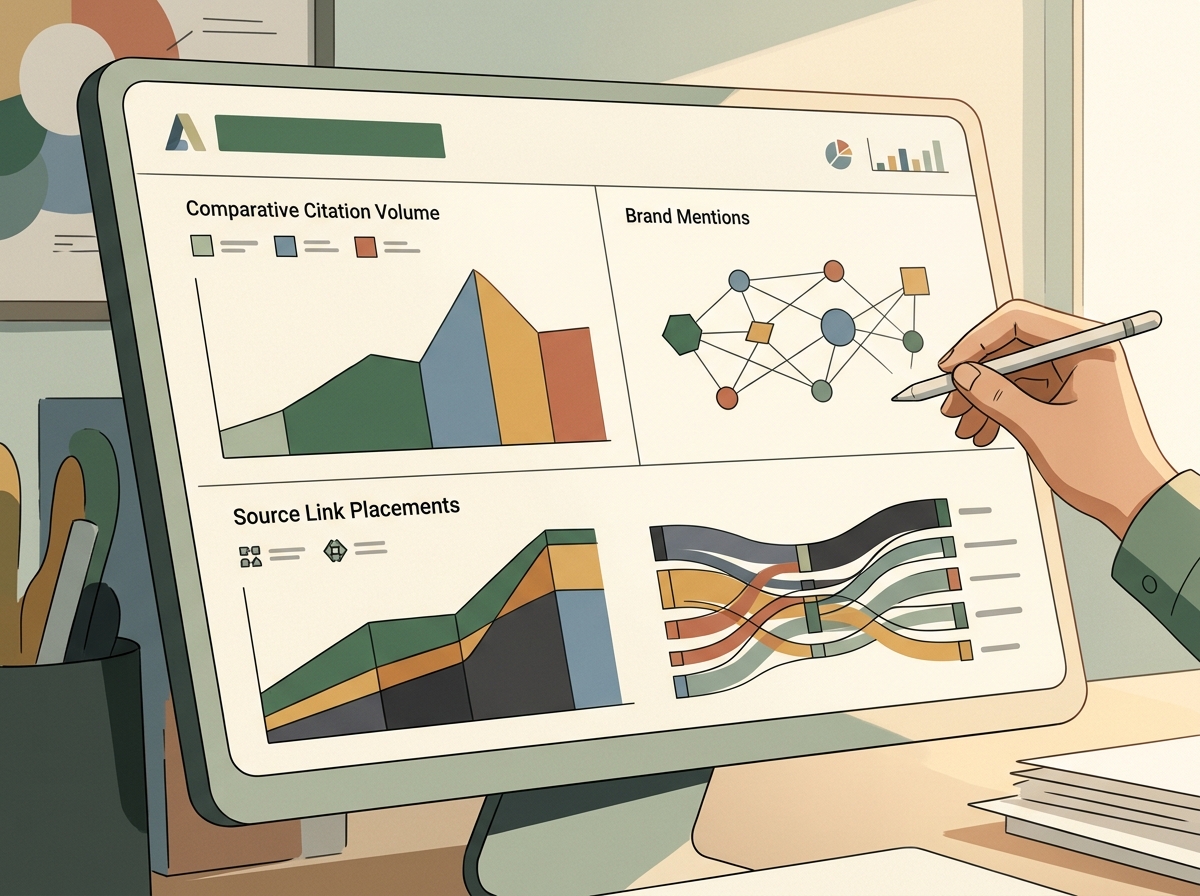
Build a Query Testing Library: Create a spreadsheet of 25 to 50 conversational prompts covering industry problems, tool comparisons, and best practice questions relevant to each client.
Log Model Citations: Run standard prompts across Perplexity, ChatGPT Search, and Google Gemini monthly to record which client URLs appear in answer footnotes.
Identify Competitor Placements: Document which competitor websites earn citations when your client does not, noting the specific data formats or statistics the model selected.
Implementing structured monitoring workflows helps agencies measure shifts in brand citation share across intelligent search engines (Profound).
Step 6: Convert AI Visibility Data into Actionable Agency Deliverables
Agencies must turn generative engine tracking data into clear, client-ready reports that highlight brand visibility and referral growth.
Citation Share Metrics: Track the percentage of target commercial prompts where the client appears as an authoritative source compared to direct competitors.
AI Referral Traffic: Filter analytics data to isolate traffic from referring domains such as perplexity.ai, chatgpt.com, and android-app://com.google.android.googlequicksearchbox.
Optimization Backlogs: Create targeted content update tasks for client pages that miss citations on high-value prompts, adding structured summary boxes, data tables, or clearer definitions.
Actionable Takeaways for Agency Teams
Review client robots.txt files immediately to confirm AI search user-agents have crawl permissions.
Restructure key service and blog content into 50-word answer blocks and comparative tables.
Establish a monthly prompt tracking sheet to measure brand citation frequency across ChatGPT, Perplexity, and Gemini.
Scale publication frequency across complete topical clusters to expand the number of indexable nodes available for generative extraction.
Scaling consistent, research-backed content across multiple client accounts requires substantial time and operational effort. Ascend automates your agency's content workflow by learning each client's brand voice, generating targeted 30-day content calendars, and automatically publishing SEO-optimized articles complete with internal links and metadata. Explore Ascend to expand client topical authority and capture AI search citations efficiently.
Written by
Ascend
Ascend is an automated SEO engine for WordPress. It handles keyword research, writes high-quality, search-optimized content, and publishes it directly to your site, so your traffic can grow on autopilot. Learn more