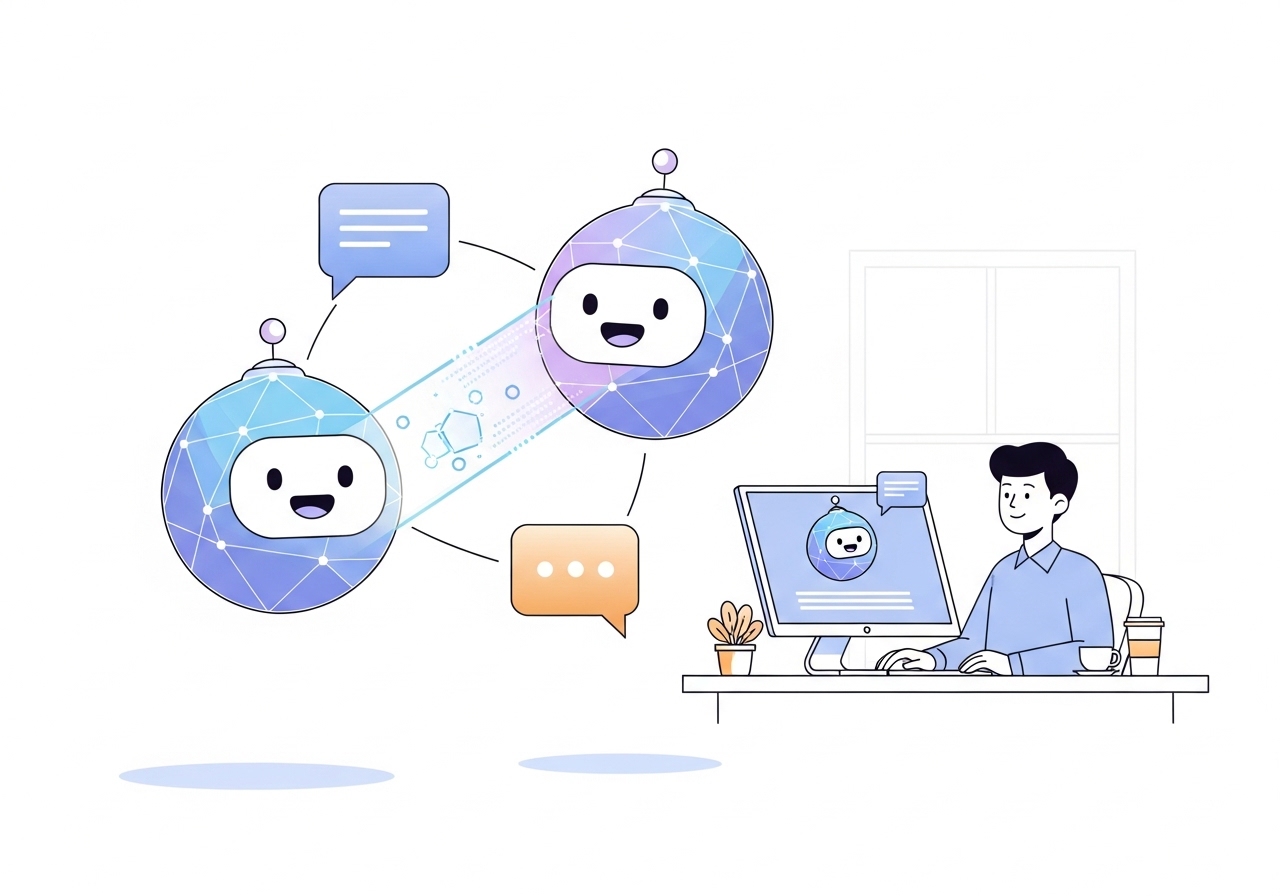
AI Talking to Each Other: How It Works and What It Means for Marketers
AI systems talking to each other, often called multi-agent systems or agent-to-agent communication, involve autonomous AI agents exchanging information and collaborating to achieve specific goals without constant human intervention. This concept is shifting how businesses approach automation, moving beyond single-task tools to interconnected systems that can manage complex workflows. For marketing agencies, SaaS companies, and creators, understanding this technology is key to improving efficiency and campaign performance.
What Is Agent-to-Agent AI Communication?
Agent-to-agent AI communication is a framework where multiple independent AI programs, known as agents, interact with one another. Think of it like a specialized team. Each agent has its own expertise and objectives, but they work together toward a larger, shared goal. For example, one agent might specialize in data analysis, while another specializes in content generation. Instead of a human operator feeding the output of the first agent into the second, the agents communicate directly to complete the task.
This collaboration is possible because the agents operate within a shared digital environment. They follow a set of rules and protocols that govern how they exchange information, negotiate, and coordinate their actions. The result is a system that can handle dynamic, multi-step processes more effectively than a single, monolithic AI model.
The Core Mechanics of AI Talking to Each Other
For AI agents to communicate effectively, several components must be in place. The process is not random; it is a structured interaction designed to produce a specific outcome. Here are the fundamental mechanics that make it work:
- Shared Goals and Objectives: The entire system is oriented around a primary objective. While each agent might have sub-tasks, its actions are aligned with the overall goal, such as launching a complete marketing campaign or generating a performance report.
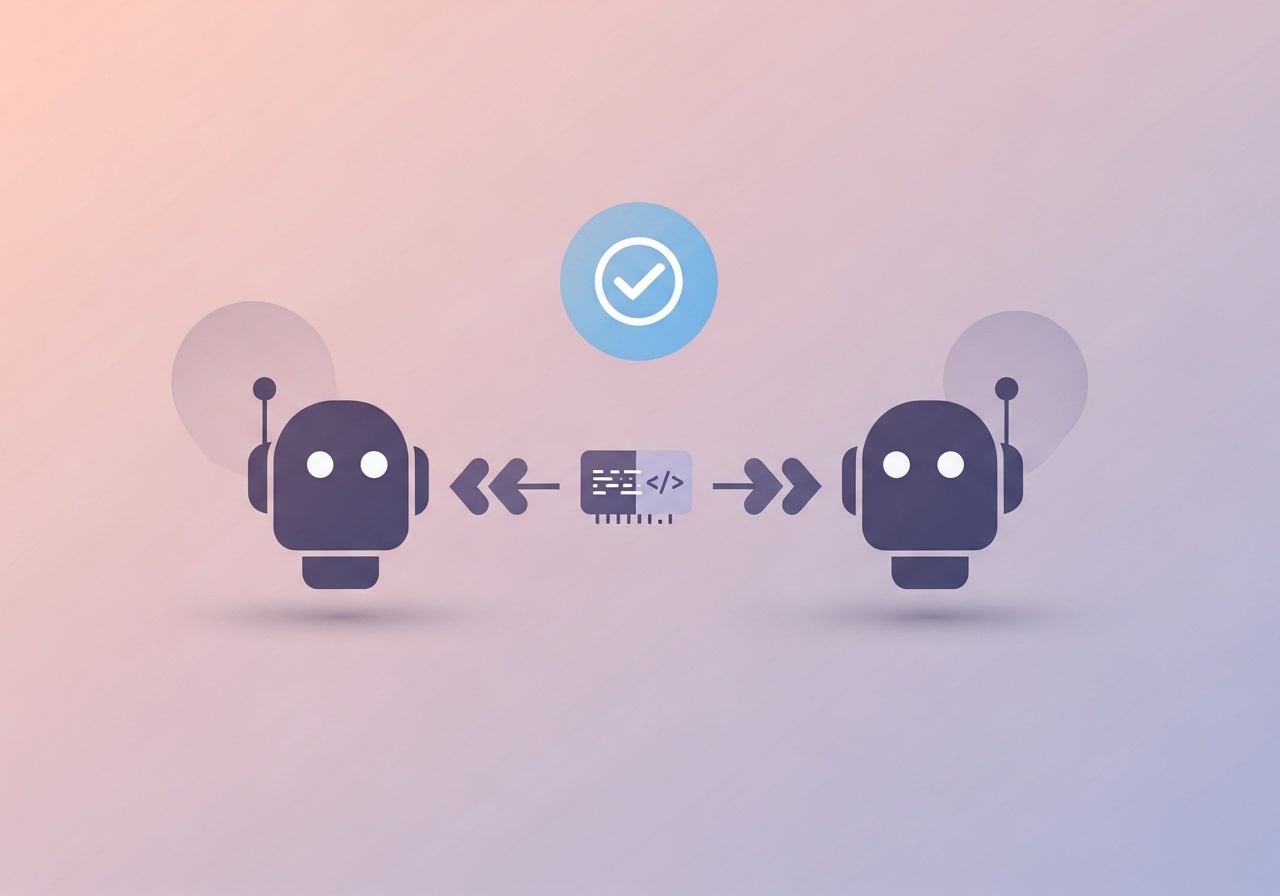
- Communication Protocols: Agents need a common language and set of rules to interact. This protocol, often called an Agent Communication Language (ACL), defines the structure of messages they can send and receive. It allows one agent to make a request, provide information, or issue a command to another.
- Information Exchange: The core of the interaction is the exchange of data. An agent performing keyword research can pass its findings directly to a content-writing agent. This second agent can then pass its completed draft to an editing agent, which in turn sends the final version to a publishing agent. This creates a seamless, automated workflow.
- Coordination Strategies: Agents must coordinate their actions to avoid conflicts and work efficiently. This can involve negotiation, where agents agree on a course of action, or sequential tasking, where one agent’s work must be completed before another can begin.
Why This Matters for Marketing and Advertising Agencies
The concept of interconnected AI agents is particularly relevant for marketing and advertising agencies that manage numerous complex tasks. Integrating multi-agent systems can introduce significant operational improvements and deliver better results for clients. The primary benefit is the ability to automate entire workflows, not just individual tasks.
Instead of manually running a keyword report, then writing a brief, then creating a draft, and finally publishing it, an agency can use a system where these steps are handled by communicating agents. This frees up human talent to focus on strategy, creativity, and client relationships. These systems can also analyze vast amounts of campaign data in real time, allowing one agent to identify underperforming ads while another automatically reallocates the budget to more successful ones. This level of speed and responsiveness is difficult to achieve with manual oversight alone.
Practical Applications in SaaS and Content Creation
The applications of AI agents talking to each other are already becoming visible in modern software and content platforms. Here are a few concrete examples relevant to SaaS and creator-focused businesses:
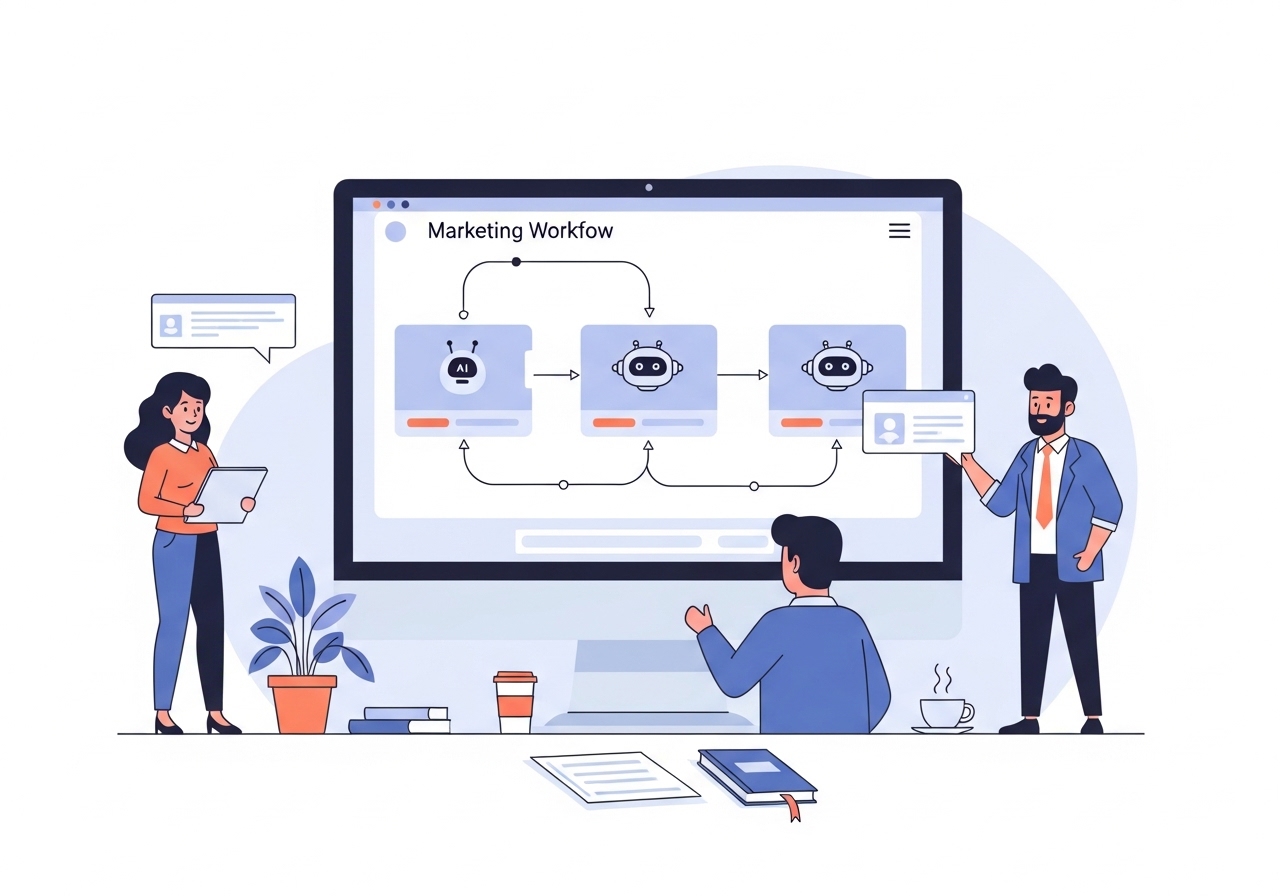
- Automated Content Pipelines: This is a core example of multi-agent systems at work. A research agent identifies high-potential keywords and topics based on competitor analysis and search trends. It passes this information to a writing agent that generates a blog post. An image-generation agent creates relevant visuals, and a publishing agent schedules the final post in a CMS like WordPress, complete with SEO metadata and internal links. Platforms like Ascend automate this entire process, demonstrating how interconnected AI can run a content strategy with minimal manual input.
- Dynamic Ad Campaign Optimization: In advertising, one AI agent can monitor audience engagement metrics across different platforms. Simultaneously, another agent tracks ad spend and conversion rates. The agents communicate to identify the most profitable audience segments and creative combinations, adjusting bids and budgets automatically to maximize return on investment.
- Intelligent Customer Support Systems: A customer-facing chatbot can act as the first point of contact. If the issue is too complex, it doesn’t just escalate to a human. Instead, it can query a separate, internal AI agent with access to technical documentation or a user’s account history to find a solution. The two agents collaborate to provide an accurate answer before needing to involve a human support specialist.
The Future Is Collaborative AI
The ability for AI to talk to each other marks a significant step forward in automation. It shifts the focus from using individual AI tools for isolated tasks to building integrated systems that can manage complex, end-to-end processes. For marketing teams and agencies, this unlocks new levels of efficiency and allows for more sophisticated, data-driven strategies. As you evaluate new tools and platforms, consider whether they operate as standalone solutions or as part of a collaborative ecosystem. The most impactful results will come from systems where AI agents work together to achieve your business goals.
Ready to automate your content strategy? Ascend is an AI-powered content engine built directly into WordPress. It handles everything from keyword research and content calendars to writing and publishing daily, on-brand blog posts. Stop juggling tasks and start growing your organic traffic. Learn how Ascend can build your content machine for you.
Written by
Ascend
Ascend is an automated SEO engine for WordPress. It handles keyword research, writes high-quality, search-optimized content, and publishes it directly to your site, so your traffic can grow on autopilot. Learn more