
10 Practical Marketing Ideas for Agencies and SaaS Companies
Coming up with fresh, effective marketing ideas can be a constant challenge for busy agencies and SaaS companies. In a competitive market, standing out requires a mix of creativity, data-driven strategy, and consistent execution. The right approach can attract your ideal customers, build brand authority, and ultimately drive growth without exhausting your team’s resources. Whether you are looking to generate leads, improve brand awareness, or scale your content efforts, these practical strategies can provide the inspiration you need.
Develop an AI-Powered Content Strategy
An AI-powered content strategy shifts the focus from manual production to strategic oversight. By using AI tools, your team can automate time-consuming tasks like keyword research, topic ideation, and even first-draft writing. This approach helps maintain a consistent publishing schedule, which is critical for building search engine authority and keeping your audience engaged. Instead of spending hours brainstorming and writing, your team can concentrate on refining content, adding unique insights, and measuring performance. For a deeper look into this approach, understanding content automation marketing is a great place to start. This method allows you to scale content production efficiently, ensuring your blog and other marketing channels are always populated with relevant, optimized material.
- Keyword Research: Use AI to identify long-tail keywords and topic clusters that your target audience is searching for.
- Content Calendars: Generate a 30-day or 60-day content calendar in minutes, complete with titles and outlines for each post.
- Automated Publishing: Integrate tools directly into your CMS (like WordPress) to schedule and publish posts automatically, complete with images and internal links.
Host a Niche-Specific Webinar Series
Webinars are a powerful tool for lead generation and establishing thought leadership. Instead of hosting a single, broad-topic event, consider developing a series focused on a specific niche within your industry. This positions your brand as a specialized expert and attracts a highly qualified audience. For example, a marketing agency could host a four-part series on e-commerce SEO, while a SaaS company might focus on productivity hacks for remote teams. Inviting guest speakers from complementary industries can also extend your reach and add credibility. According to research from The Hartford, developing key partnerships is a proven way to drive business growth by tapping into established communities.
To make your webinar series successful, ensure you:
- Promote heavily: Use email marketing, social media, and paid ads to reach your target audience.
- Offer value: Provide actionable advice, templates, or checklists that attendees can use immediately.
- Follow up effectively: Nurture leads with post-webinar content, such as a recording of the session, a summary of key takeaways, or an exclusive offer.
Create an Interactive Tool or Calculator
One of the best marketing ideas is to offer something of tangible value for free. An interactive tool, such as a mortgage calculator for a real estate agency or an ROI calculator for a SaaS product, can be an incredibly effective lead magnet. These tools solve a specific problem for your potential customers and provide them with instant, personalized results. In exchange for their email address, users get access to valuable information, and you get a qualified lead who has already shown interest in your area of expertise. This strategy works because it is user-centric and non-intrusive. It draws visitors to your site and keeps them there longer, which can also provide a small boost to your SEO.

Launch a Partner Co-Marketing Campaign
Collaborating with another company that serves a similar audience can be a highly effective way to expand your reach. A co-marketing campaign involves partnering with a non-competing business to create and promote a shared piece of content or offer. This could take the form of a joint webinar, a co-authored ebook, a collaborative research report, or a bundled service offering. The key is to find a partner whose audience aligns with yours and whose brand values are compatible. A successful partnership gives both companies exposure to a new, relevant audience and allows you to pool resources for a bigger marketing impact. When planning a campaign, establish clear goals and responsibilities from the start to ensure a smooth collaboration.
Produce a Data-Driven Industry Report
Original research is one of the most valuable types of content you can create. By surveying your audience, analyzing your own user data, or compiling publicly available information, you can produce a data-driven industry report that provides unique insights. This type of content is highly shareable and attracts backlinks from other websites, which is excellent for SEO. It also positions your brand as an authority in your field. For instance, an advertising agency could release an annual report on social media ad spending trends, or a productivity SaaS could publish findings on the state of remote work. The effort required is significant, but the payoff in terms of brand credibility and organic reach is substantial.
Build a Community on Slack or Discord
Creating a dedicated online community gives your customers and prospects a place to connect with your team and each other. Platforms like Slack or Discord are ideal for fostering these connections. A community can serve multiple purposes: it can be a support channel, a place for users to share best practices, and a source of direct feedback for your product development team. By facilitating conversations and providing exclusive content, you build brand loyalty and turn customers into advocates. An active community also creates a moat around your business, as members are less likely to switch to a competitor when they feel connected to your brand’s ecosystem.
Offer a Free Certification Program
A certification program can be a powerful marketing tool that educates your audience while promoting your product or service. Create a free online course that teaches users how to master your software or a key industry skill related to your offerings. At the end of the course, award a digital certificate that they can share on their LinkedIn profiles. This provides value to your users by helping them with professional development, and it generates organic promotion for your brand every time someone shares their certification. It also ensures your users are getting the most out of your product, which can lead to higher retention rates. HubSpot Academy is a prime example of how effective this strategy can be.
Run a User-Generated Content Contest
User-generated content (UGC) is authentic, trustworthy, and highly engaging. A contest is a great way to encourage your customers to create and share content related to your brand. For example, you could ask users to post a photo or video on social media showing how they use your product, using a specific hashtag. The best submission wins a prize. This type of campaign generates a wealth of content that you can repurpose for your own marketing channels. It also provides powerful social proof by showing real people enjoying your product. A UGC contest builds a sense of community and makes your customers feel more involved with your brand.
Develop a Webinar Series to Share Marketing Ideas
Demonstrating your expertise is a core component of a strong marketing strategy. Hosting a webinar series focused on providing practical and actionable marketing ideas can attract your ideal customers while building trust. Unlike a product demo, these educational webinars should focus on solving common industry problems. Each session can tackle a different topic, such as “5 Ways to Improve Email Open Rates” or “How to Build a Content Calendar That Works.” By giving away valuable information for free, you establish your company as a go-to resource. This goodwill often translates into sales when attendees are ready to purchase a solution. It’s a long-term play that builds a loyal audience and a strong brand reputation.

Automate Your SEO and Content Workflow
For many marketing teams, the biggest obstacle to growth is the sheer amount of manual work involved in content creation and SEO. Automating your workflow can free up your team to focus on strategy and creativity. This involves using tools to handle repetitive tasks like keyword tracking, content brief creation, internal linking, and publishing. Systems that can learn about your brand, audience, and competitors are particularly effective. These systems can generate a full content plan and then execute it with minimal oversight. Exploring how content machines work reveals how you can build a system that consistently produces high-quality, optimized blog posts every day. This consistency is key to scaling organic traffic and achieving long-term SEO success.
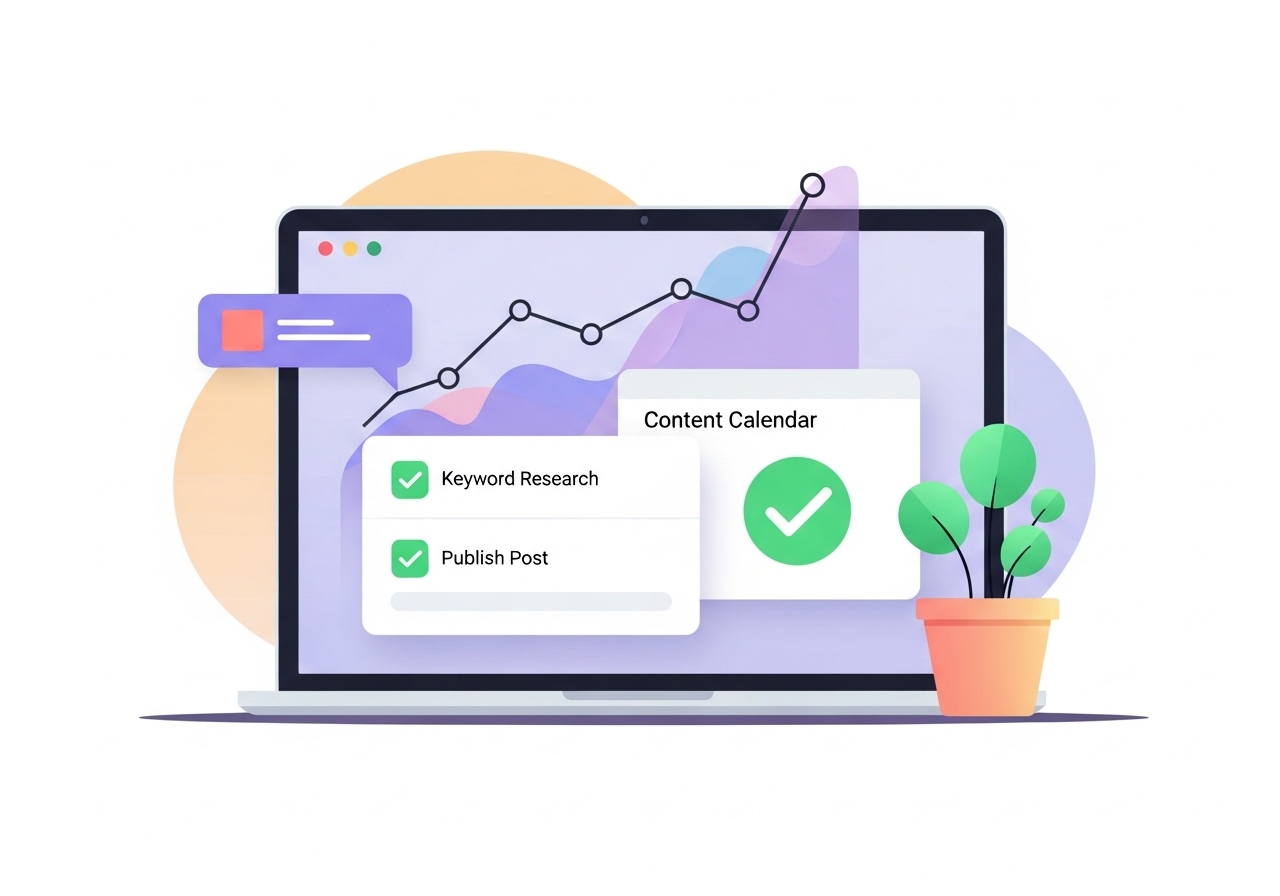
The most effective marketing ideas are those that provide genuine value to your audience while aligning with your business goals. Whether you choose to build a community, create data-driven reports, or automate your content pipeline, the key is to be consistent and strategic. Pick one or two of these ideas to start with, measure your results, and iterate based on what you learn. By focusing your efforts on high-impact activities, you can build a marketing engine that sustainably drives growth for your agency or SaaS company.
Ready to put your content marketing on autopilot? Ascend automates your entire blog content strategy, from keyword research to publishing, right inside your WordPress dashboard. Stop spending hours on manual tasks and start growing your organic traffic effortlessly. See how Ascend can transform your content workflow.
Written by
Ascend
Ascend is an automated SEO engine for WordPress. It handles keyword research, writes high-quality, search-optimized content, and publishes it directly to your site, so your traffic can grow on autopilot. Learn more